Category Archives: Environment

Malta – Transport and Trees

We thought we had come well prepared for the challenge of hiring a car in a strange country after arriving late at night. We’d printed out a full list of Google directions to the hotel at the far end of Malta. Luckily my colleague, Linda Benfield, had also bought a map at Bristol Airport.  It was a very valuable last minute purchase!

The directions relied on street names. We found one later, sixteen feet up a wall in inch high letters, some of which were missing. Navigation was a challenge even with the Marco Polo map. Signage seemed optional, the names of towns changed as you got nearer and EU funding had inspired a proliferation of new roundabouts. There was even an extra tunnel to the ones depicted!
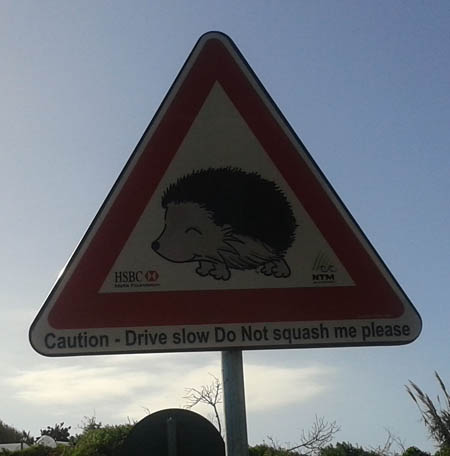
Hedgehog sign
Beware of the hedgehogs!

Being resilient, we had a torch to do map reading with, and made it to the hotel. The ‘Riviera’ sign lights up blue at night and is something of a landmark as you drive the the hairpin bends of Marfa Ridge. There was no need to worry about Reception closing, as a coach full of German tourists had just arrived.

Discovering it only took ten minutes to go from really close to our sought after destination in central Mdina, to being confused on Route One at the northern edge of the island was a revelation, and explained why we spent the first few days visiting sites at random as we stumbled across them. We were simply expecting too much distance.

Malta is a small island with a long history. Everyone knows their way around. If you’re able-bodied, there’s an excellent bus service – without, alas, the iconic yellow buses, which were stood down in 2011. Walking is a good option too. Some of the important Neolithic sites can only be accessed on foot. Remember the summer sun can be merciless in this open landscape; take water and a hat.

Land here has been cultivated for centuries and deforestation is a problem. On their arrival in 1529, the Knights of St John – soon to be the Knights of Malta – reported ‘an island without trees.’

Rural landscapes are divided into tiny vegetable plots, there is neither space nor water for many large trees. Although it was only 20 C in January, the impact of the summer heat was baked into the very stones.

The contrast with Buskett Forest Gardens was startling. Here, we found open water, running streams, cool and damp air. This reforestation project dates back to its use as a hunting preserve by the Knights in the 1600s. It’s now a Natura 2000 site. Native tree species from Malta’s once extensive forests support a variety of rare wildlife, including many migratory birds.

Buskett Forest Gardens, Malta 2016
Open water in the forest

On Sundays, as we discovered, many Maltese families come here for picnics, and the car park becomes very full. We were hoping to find the famous cart tracks and caves, which were surely just at the top of that hill, but couldn’t find the way. Perhaps it was signposted from the other side of the plateau. I recommend hiring a guide!


London Transport

After my experience on the Road to Hell, I reconsidered my plan to drive to London that weekend. Clearly, more vehicles was not what the situation there needed.

I booked a ticket over the phone with Berry’s Coaches, a local firm. I boarded at Glastonbury Town Hall, read Private Eye and a newspaper, and was in Hammersmith before I had got round to the puzzles.

The new Underground trains were a little disconcerting. There aren’t any divisions between the carriages. You can see down the whole length of the train, how it twists and leans on the track ahead. With an Oyster card, a stranger in town has to take the fares on trust, but I’m always pleasantly surprised by its remaining balance. The entire return trip from Somerset cost me under £30.

Cheaper than the diesel for my somewhat rural camper van. No worries about overheating in traffic jams, finding somewhere to park or straying into the Low Emission Zone! I have to admit that the air quality in central London is greatly improved due to this policy, which excludes elderly diesel vans, even if it puts me to some inconvenience.

News is easy to come by here. If you’re not hooked into the direct feed of your smartphone, there are free newspapers everywhere.

I read about the London living wage campaign, to which many firms have already signed up. If workers could afford to live within walking distance of their jobs, this would reduce the commuter traffic.

Labour threatened to change the name of the House of Lords to the ‘Senate’ and move it to Manchester. This too would make a major contribution to reducing congestion. The frantic dashing of lobbyists between Houses would be offset by the regular travelling of the support staff.

Finally, such a valid reason for the HS2 that one wonders which idea has precedence here. If there’s a joined up plan, why not share it with us stakeholders who will have to pay for it?

Willows and Flooding

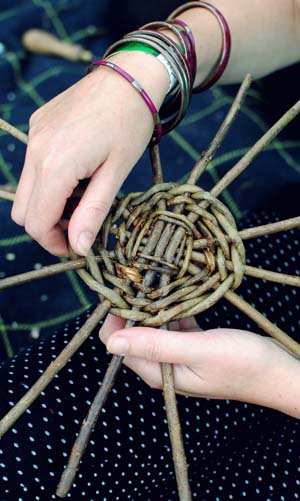
The Somerset Levels have grown willow since prehistoric times; the remains of a basket were found by the Glastonbury Lake Village. Willow trees are plentiful in marshlands as they can thrive in waterlogged soils. Their long flexible shoots have many uses, including furniture, fencing and fish traps.

Traditional methods of pruning, or pollarding, cut the tree back to its main trunk. A shock of long straight withies springs out from the cut, and can be harvested. The trees are quite tall and have a distinctive knobby shape. Pollarded trees need to be maintained, which is difficult when the trimmings have no value.

Many modern willow beds are coppiced. The growth is cut back, even to ground level, every couple of years. Material which could be used for craft products is burned as biomass fuel. Willow beds established by grant funding have no budget for upkeep.

The Levels grew nearly 40 square kilometres of willow in 1930, but this has declined to a mere 1.4, mainly due to replacing basketry with disposable bags and packaging. Garden furniture is made from imported, oil based plastic and most people would struggle to recognise a fish trap.

Planting willow around the banks of rivers stabilises them, and can be extended into a buffer zone. This would aid the retention of water in a managed flood plain, protecting urban land further downstream. Willow is particularly good at removing toxins from contaminated land. It could be planted straight after a major flood, but it won’t be, as no-one can earn a living from it.

The decline of willow production needs to be reversed by creating a market.

The storms that often accompany flooding have wreaked havoc on garden fencing. Tall solid panels which resist the wind have fallen in heaps. Woven willow fencing allows the light and air through, while affording privacy.

Order some from a local willow craftsperson. It will be more expensive than cheap imported products. If you have a garden and a fence, though, it makes sense to support the farmers upstream who are preventing them flooding. Think about what else you could replace with locally sourced willow.

Alternatively, find a project which needs help with coppicing and negotiate your own materials.  Carymoor Environment Trust in Somerset have a volunteers’ day every Tuesday.

willow crafts


The Hemp Twine Project – Part One

One of my planned projects involves encouraging the sale of hemp twine to promote the local economy in Somerset. Everyone needs string. Hemp was once a major crop here, supplying huge quantities of rope for the Bristol shipping trade.

You can still see some of the long sheds where the ropes used to be twisted together from fibres.

Accordingly, after my summer adventures in the field, I set about ordering some hemp twine. Reluctant to create yet another customer profile for a possible single purchase, I called my chosen supplier and spoke to a friendly chap from the north of England.

I deplored the price of hemp twine, given the ease and low cost of hemp cultivation. He told me the sad tale of the decline of the natural fibre rope making industry faced with competition from oil based plastics. The hemp I was buying came from Egypt. Could I believe that unscrupulous sellers even tried to pass off jute fibre as hemp?

Uncomfortably aware that, although my grandfather would certainly have known the difference, I could be thus hoodwinked all day long, I moved the subject to purse nets. The hemp twine – the largest and cheapest reel I had found – was destined to make and repair these nets, commonly used for catching rabbits.

Alas, there was a sad story there too. Modern lads take no care of their hunting gear, but are content to stuff wet and muddy nets into a plastic sack at the end of a day. Left in this condition, even the spectacular ability of hemp to resist rot is overcome. Cheap imported plastic nets, however, can be abused endlessly.

Lads – do you realise that your careless lazy habits are having this impact? Take a minute or ten just to rinse out your nets and hang them up to dry before opening that can and slumping in front of the TV! Buy hemp purse nets or better still have some pride in your craft and make your own. There are instructions on the internet.

Hemp can and should be widely grown in this country. As well as fibre to replace imported oil based plastics, it yields nutritious seeds ideal for livestock feed. All it lacks is a market. Hundreds of new jobs could be created.

See how it’s all connected?

Start paying attention.