Tag Archives: Somerset

Willows and Flooding

The Somerset Levels have grown willow since prehistoric times; the remains of a basket were found by the Glastonbury Lake Village. Willow trees are plentiful in marshlands as they can thrive in waterlogged soils. Their long flexible shoots have many uses, including furniture, fencing and fish traps.

Traditional methods of pruning, or pollarding, cut the tree back to its main trunk. A shock of long straight withies springs out from the cut, and can be harvested. The trees are quite tall and have a distinctive knobby shape. Pollarded trees need to be maintained, which is difficult when the trimmings have no value.

Many modern willow beds are coppiced. The growth is cut back, even to ground level, every couple of years. Material which could be used for craft products is burned as biomass fuel. Willow beds established by grant funding have no budget for upkeep.

The Levels grew nearly 40 square kilometres of willow in 1930, but this has declined to a mere 1.4, mainly due to replacing basketry with disposable bags and packaging. Garden furniture is made from imported, oil based plastic and most people would struggle to recognise a fish trap.

Planting willow around the banks of rivers stabilises them, and can be extended into a buffer zone. This would aid the retention of water in a managed flood plain, protecting urban land further downstream. Willow is particularly good at removing toxins from contaminated land. It could be planted straight after a major flood, but it won’t be, as no-one can earn a living from it.

The decline of willow production needs to be reversed by creating a market.

The storms that often accompany flooding have wreaked havoc on garden fencing. Tall solid panels which resist the wind have fallen in heaps. Woven willow fencing allows the light and air through, while affording privacy.

Order some from a local willow craftsperson. It will be more expensive than cheap imported products. If you have a garden and a fence, though, it makes sense to support the farmers upstream who are preventing them flooding. Think about what else you could replace with locally sourced willow.

Alternatively, find a project which needs help with coppicing and negotiate your own materials.  Carymoor Environment Trust in Somerset have a volunteers’ day every Tuesday.
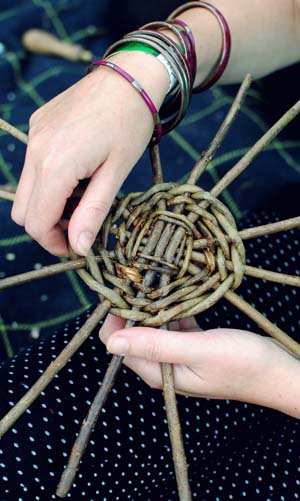
willow crafts


Driving in the Water Margins

Here on the levels in Somerset between the sea and the high ground we’re used to seeing the water. Driving between towns, the fields are shimmering mirrors, traced with sunken hedges, populated by opportunistic swans. The main roads are edged by dark puddles, threatening to merge over the white line with every fresh downpour.

Villages hugging the tiny ridges of high ground out in the marshlands are often cut off. Farm tractors become informal delivery vans and buses. Rows of willow trees, planted so that people can see where the road was, come into their own. The river lurks just over a low bank.

The network of narrow lanes across country are under water in many places, especially at the crossroads and gateways where you could have turned around. If you come upon one flooded section, chances are there are more ahead. It’s unwise to use these lanes as a short cut.

Towns are linked by single main roads. An incident on one of these could involve you in a twenty mile diversion just to get back from the shops. If that route then becomes blocked – easy enough with the high winds and dangerous conditions – hundreds of people could become stranded for hours.

Keep at least half a tank of fuel, even for local journeys. Carry waterproofs, wellies and a drink of water in your car. Make sure your mobile phone is charged.

Shop with a list and bring in extra long life food. Try to avoid going out at all in heavy rain. Start using all those ready meals in the freezer; if your electricity goes, they will be a write off anyway.

Night time is the most dangerous. Plan to stay in, invite neighbours round, play cards or games, learn to knit. Spending all your evenings slumped in front of the TV will soon give you cabin fever!

Driving through flood water is unwise, especially if you are on your own. You can’t see how deep it is, if the road has been washed away underneath, if there are any obstructions ahead. Your electrics may get damaged.

Don’t change gears but drive slowly and steadily. If your engine cuts out, it may have got water in it. Trying to restart it might destroy it.

Even six inches of fast moving water can sweep you off your feet, and not much more can move your car. If you become trapped in a flood, call for help at once. Don’t panic and think very carefully about your escape route.

Resilience is about adaptation. Change your behaviour in response to the environment. Go out as little as possible and make every journey count. Even if you’re not directly affected by flooding, you could still be caught up in a diversion as police try to clear another area. Your presence on the road is one more factor for the emergency services to take into account, so don’t waste it.


Community Resilience and Emergency Welfare Newsletter

C.R.E.W are borrowing space here to post their steward newsletter until they can sort out a new website; however this coincides with some exciting changes in their organisation…

“Hi to all our loyal and fabulous volunteers!

Wishing you all a merry festive season!

We have rather suddenly got a new email address crewcic@gmail.com since the locally based Ergonet hosting company went bust – please direct all stewarding enquiries here for the moment and we will let you know if this changes. They wouldn’t let us send out this newsletter.

We’re seeking funding for a new website, which will come with a proper email address.

We’ve now become a Community Interest Company so that we can develop more of our resilience courses and practical skills camps. We’ll still be running stewards at One Love next summer, but not the Green Gathering. However, we are recruiting people for traffic management at the Langport Scythe Fair in June, and are looking for small event work especially in Somerset.

For next year, we’re planning low cost resilience training courses in France, the opportunity to meet up at an established camp and various hands-on craft events, among other things. We’ll send out a more detailed newsletter in the New Year.

As we are now a proper company we are building up a stock of useful items and local craftworks for sale to raise money for providing training in all aspects of resilience. For example….

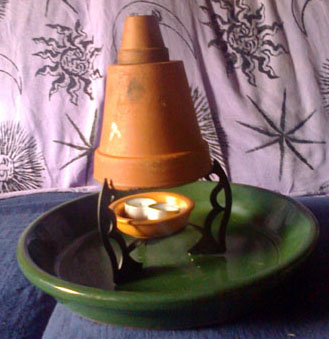
Candle stove (as seen on Facebook except this one has been researched and tested for the past year)

 new design 72ppi

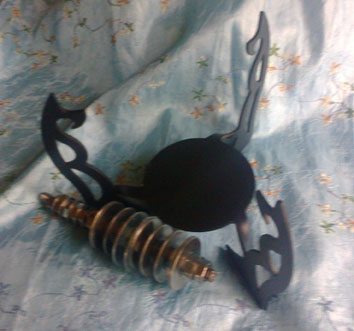
 The key features are the stainless steel core and the metal stand, which we can supply for £25 (Stand £20, core £7.50 sold separately) with full instructions.  Contact the temporary gmail address above for details

 new stand and core 72ppi

Resilience Handbook a 32 page A5 booklet with the basic outlines of the Resilience Wheel concept, as seen on our now vanished website, which is £3

Both items are post free to our volunteer community!

Our Facebook friend page CREW HQ regularly posts interesting and useful ideas around resilience and sustainability, please do join us there!

Cheers

Jane & Helene (Directors)

Linden (Secretary)

Linda (Consultant)

Simon (Marketing)”


The Hemp Twine Project – Introduction

There are just over half a million people in Somerset. Imagine if, just once a year, half of those people bought an item on which a local supplier made fifty pence profit. That would generate an amazing £125,000 for the local economy. More jobs created and investment in local initiatives…..at Community Resilience and Emergency Welfare CIC they have developed this concept into the Hemp Twine Project.

They were looking for an item, not too large or expensive, that always comes in handy and could be fully sourced locally. Although there are a few things made in Somerset, such as lavender oil, they decided to start a new product. This was an educational exercise rather than a commercial venture after all.

Everybody uses string. It’s not on the regular shopping list, but it’s not a luxury item either. It keeps very well, is easy to store and cheap to buy. Most household string is made of oil based plastic or imported cotton. Replacing this in your home with a locally sourced, organically grown, biodegradable string is definitely Good for the Environment.

As well as wool and apples, Somerset can grow large amounts of hemp. This used to be processed into fibre and supplied the local shipyards in the days of sail. Hemp as a material is remarkably resistant to rot, even in challenging salt water conditions, so it was often used in ropes and canvas. Nylon and plastic ousted natural fibres awhile ago, and the industry fell into decline. The soil and weather conditions which favoured hemp production are still in place though, and it is a crop which requires no chemical intervention to thrive.

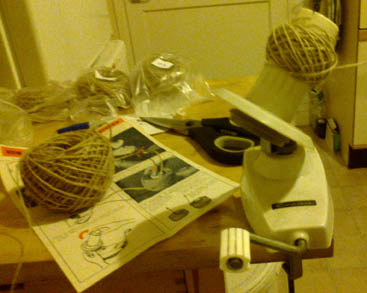
Today, hemp twine is sold to the home craft market, for use in beadwork or macrame. Sourcing a larger quantity was difficult but, with the aid of the amazing desktop ball of string maker, finally translated into a product at the right price.

old fashioned string winding machine
The old fashioned winding machine is fed from a reel on the right and makes neat balls of twine

If enough people buy hemp twine, the hemp industry could revive faster than it fell. Farmers would be paid well for a low cost crop, a small industrial unit would suffice to process the fibre into twine and local shops would profit from the sales. Spin offs include hemp oil, valuable as a source of Omega-3, hemp cake for cattle and hempcrete for building material. Each of these can underpin another entire small industry.

All that is needed is a market – your one ball of string a year – and the local economy could be richer by a whole new industry! With a steady income from conscious consumerism, businesses can plan ahead. Instead of playing the customer loyalty game with uncaring multinationals, bring it home.

Think what else you could create by buying local.

The Apple Juice Project – Part One

Somerset, famed for its cider, is still a good place to grow apples. Many gardens boast at least one tree, but few people are able to make full use of the fruit and it often goes to waste. Collecting spare fruit to make apple juice could be a resilient way forward.

So we collected bags of sound apples. They need to be in good condition for juicing, not bruised or chewed. We borrowed a scratter, a press and a pasteuriser from Somerset Community Food and spent the afternoon pressing apples.

Much hard work later, we had fifteen bottles to fill the pasteuriser, and some left over. Unpasteurised apple juice will only keep for a few days, even in a fridge. The pasteuriser sat on a chair in the kitchen, full of very hot water, for several hours.

Although the juice did keep well – we opened a bottle eighteen months later, which was fine – it had taken a lot of apples and hard physical labour to make not very many bottles. If ever a process called out for mechanisation, this was it.

We knew a local firm would take apples and press them into juice for a fee, which no longer seemed so unreasonable. It would be possible to make a profit of £1 a bottle. Could this finance a larger project?

This year, we explored Plan B. Collecting fruit from an overgrown orchard in West Pennard, we estimated that one tree provided enough apples for one crate of the five needed for a minimum order. Two people took an hour to clear the ground of rotten apples and windfalls, then pick the good apples from the tree.

The profit margins are too small to offer the householder free apple juice, and you must be careful how much you sell at cost. Most people who have unused fruit trees, though, are pleased to have the ground underneath them cleared. Fallen fruit attracts wasps, is slippery and interferes with lawn mowing.

People already doing gardening work could combine this with harvesting the apples. A cider company might buy the windfalls, increasing the profit margin. Careful planning of collection rounds can minimise fuel use.

One crate of apples gives you about 12 bottles, from which you need to pay for your fuel and the time spent selling the juice. You would need to invest the money in having the juice made, and maintain a small van. It should be possible to earn a small living from the wasted apple harvest for one quarter of the year though.

The project may be a good income for a community group using volunteer labour. They would have the added benefit of being able to access a market, funding for a pilot scheme and better publicity networks.


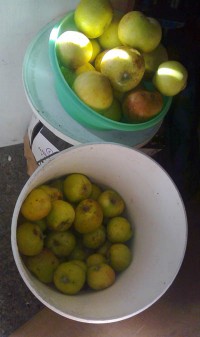
preserved apples
Keeping apples in a sealed bin can preserve them for months

The Hemp Twine Project – Part One

One of my planned projects involves encouraging the sale of hemp twine to promote the local economy in Somerset. Everyone needs string. Hemp was once a major crop here, supplying huge quantities of rope for the Bristol shipping trade.

You can still see some of the long sheds where the ropes used to be twisted together from fibres.

Accordingly, after my summer adventures in the field, I set about ordering some hemp twine. Reluctant to create yet another customer profile for a possible single purchase, I called my chosen supplier and spoke to a friendly chap from the north of England.

I deplored the price of hemp twine, given the ease and low cost of hemp cultivation. He told me the sad tale of the decline of the natural fibre rope making industry faced with competition from oil based plastics. The hemp I was buying came from Egypt. Could I believe that unscrupulous sellers even tried to pass off jute fibre as hemp?

Uncomfortably aware that, although my grandfather would certainly have known the difference, I could be thus hoodwinked all day long, I moved the subject to purse nets. The hemp twine – the largest and cheapest reel I had found – was destined to make and repair these nets, commonly used for catching rabbits.

Alas, there was a sad story there too. Modern lads take no care of their hunting gear, but are content to stuff wet and muddy nets into a plastic sack at the end of a day. Left in this condition, even the spectacular ability of hemp to resist rot is overcome. Cheap imported plastic nets, however, can be abused endlessly.

Lads – do you realise that your careless lazy habits are having this impact? Take a minute or ten just to rinse out your nets and hang them up to dry before opening that can and slumping in front of the TV! Buy hemp purse nets or better still have some pride in your craft and make your own. There are instructions on the internet.

Hemp can and should be widely grown in this country. As well as fibre to replace imported oil based plastics, it yields nutritious seeds ideal for livestock feed. All it lacks is a market. Hundreds of new jobs could be created.

See how it’s all connected?

Start paying attention.