Category Archives: travel

Iceland Adventure

In the Resilience Handbook, I recommend going on regular adventures.  Travel by a method you don’t normally use, go to somewhere different.  It doesn’t have to be exotic – a week in a campsite is just as good for your resilience.  As a solo traveller, I prefer to use hostels.  They’re cheap, you can self-cater, and you meet interesting people in the communal areas.

The confidence I gained by hostelling around Britain enables me to explore further afield on a limited budget.  I did some research and packed appropriate clothes; there was very little I didn’t actually use.   Even an 18 kilo suitcase was a serious handicap on public transport though; it may be worth while paying the extra to fly from a closer airport next time.

Why Iceland?  With its renewable energy and reforestation programme, it’s an ideal destination for the resilience explorer!  I’ve got extensive notes to go over, and a return trip is already on the cards.  I never did get a recipe for putrefied shark – but I know the history behind it now.

Here’s some pictures
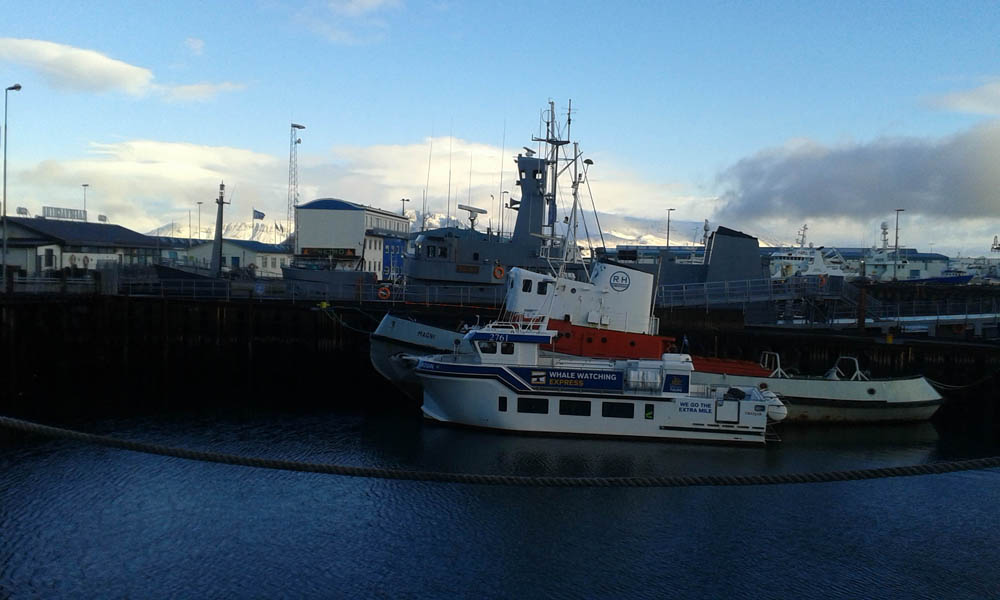
iceland old harbour
The Old Harbour is quite industrial around the bus stop – then you walk round the corner and see the bay open out towards the sharp snowy hills
My kind of tour bus! Off into the wilds for the 'Game of Thrones' tour. Winter driving in Iceland is challenging; use tours, not car rental.
My kind of tour bus! Off into the wilds for the ‘Game of Thrones’ tour. Winter driving in Iceland is challenging; use tours, not car rental.
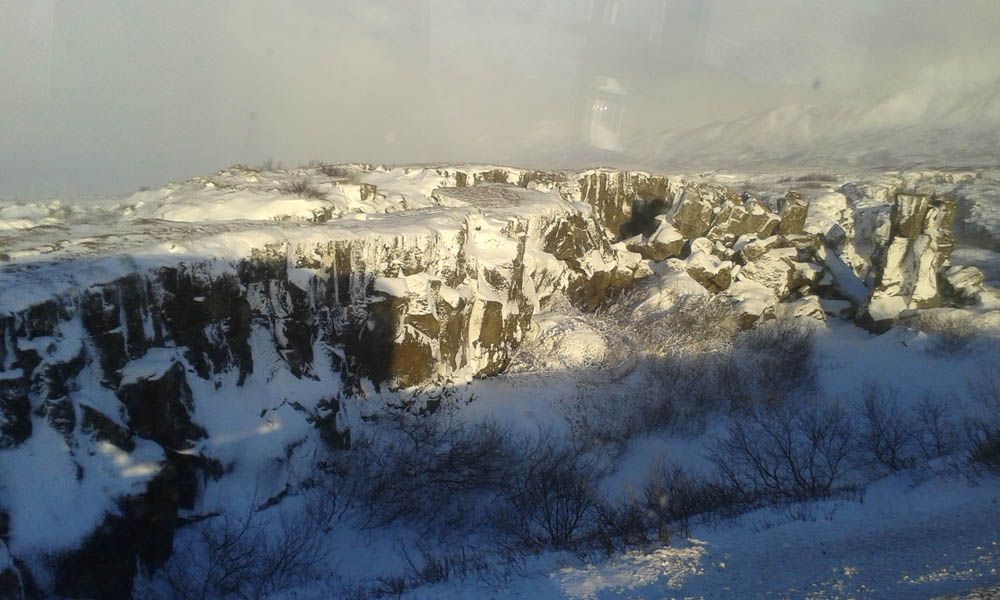
The landscape north of Reykjavik from the tour bus - there was a strong wind that day, whipping the powdery snow up into a white out later on!
The landscape north of Reykjavik from the tour bus – there was a strong wind that day, whipping the powdery snow up into a white out later on!
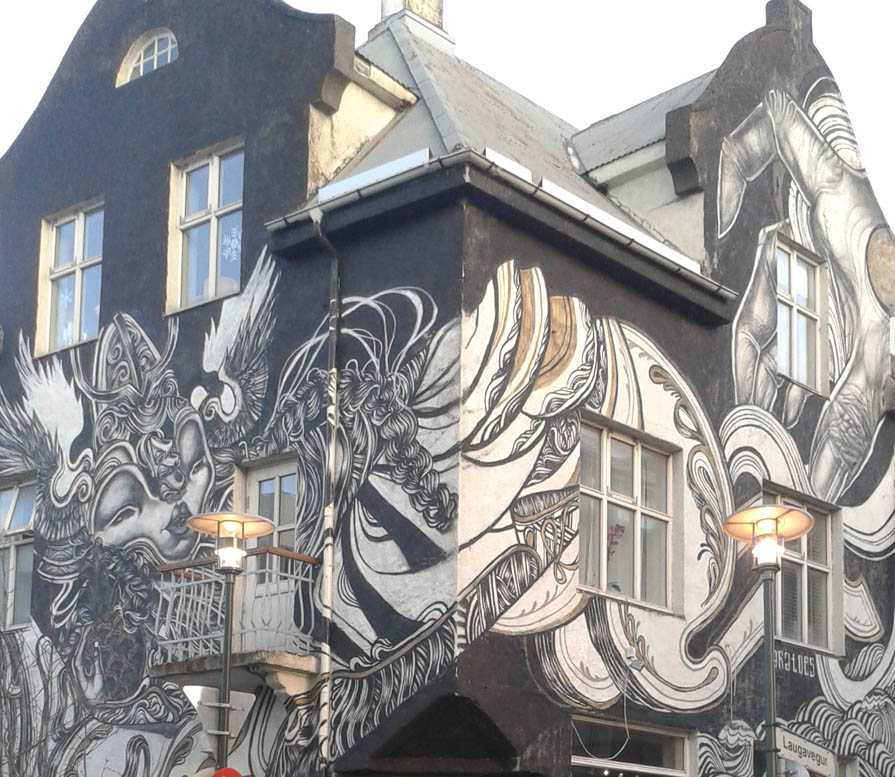
iceland murals 2016
Many ordinary house walls in Reykjavik are adorned with amazing murals – the streets are full of random sculptures as well.

I stayed at Reykjavik City Hostel which is a little out of town but well serviced by the 14 bus from across the road, which takes you all the way to the Old Harbour (Grandi stop the return journey is headed Listabraut).  It’s right next to one of the best heated pools in town, Laugardalslaug and there’s a lovely park behind it.

The Game of Thrones tour is run by Grayline.  All the tours, and the airport bus, collect you from right outside the hostel.  This was a relief as, outside the main town, the suburban roads are quite exposed for the walker.  It takes less than an hour to walk to the other side of the town centre from the hostel though.

Another good day’s winter wander – keep in mind you have only 6 hours of daylight before the cold dark sets in! – is Oskjuhlid wooded park.  The number 5 bus takes you to the artificial beach with hot tub at Nautholl, then you can wander past the site of the new Asatru heathen temple and head upwards through the dwarf birch and evergreens to the Perlan at the hill top.  It’s a challenge – the paths are often icy and you can’t see the landmark building for the trees – but the view over town is wonderful and the cafe quite reasonably priced.  An 18 bus goes from the main road to the Hlemmur – bus station – where you can catch the number 14 again.
Malta – Transport and Trees

We thought we had come well prepared for the challenge of hiring a car in a strange country after arriving late at night. We’d printed out a full list of Google directions to the hotel at the far end of Malta. Luckily my colleague, Linda Benfield, had also bought a map at Bristol Airport.  It was a very valuable last minute purchase!

The directions relied on street names. We found one later, sixteen feet up a wall in inch high letters, some of which were missing. Navigation was a challenge even with the Marco Polo map. Signage seemed optional, the names of towns changed as you got nearer and EU funding had inspired a proliferation of new roundabouts. There was even an extra tunnel to the ones depicted!

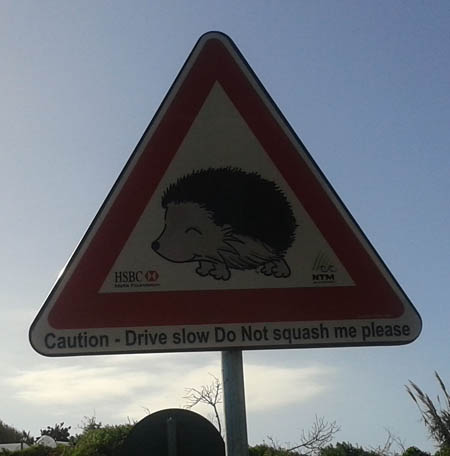
Hedgehog sign
Beware of the hedgehogs!

Being resilient, we had a torch to do map reading with, and made it to the hotel. The ‘Riviera’ sign lights up blue at night and is something of a landmark as you drive the the hairpin bends of Marfa Ridge. There was no need to worry about Reception closing, as a coach full of German tourists had just arrived.

Discovering it only took ten minutes to go from really close to our sought after destination in central Mdina, to being confused on Route One at the northern edge of the island was a revelation, and explained why we spent the first few days visiting sites at random as we stumbled across them. We were simply expecting too much distance.

Malta is a small island with a long history. Everyone knows their way around. If you’re able-bodied, there’s an excellent bus service – without, alas, the iconic yellow buses, which were stood down in 2011. Walking is a good option too. Some of the important Neolithic sites can only be accessed on foot. Remember the summer sun can be merciless in this open landscape; take water and a hat.

Land here has been cultivated for centuries and deforestation is a problem. On their arrival in 1529, the Knights of St John – soon to be the Knights of Malta – reported ‘an island without trees.’

Rural landscapes are divided into tiny vegetable plots, there is neither space nor water for many large trees. Although it was only 20 C in January, the impact of the summer heat was baked into the very stones.

The contrast with Buskett Forest Gardens was startling. Here, we found open water, running streams, cool and damp air. This reforestation project dates back to its use as a hunting preserve by the Knights in the 1600s. It’s now a Natura 2000 site. Native tree species from Malta’s once extensive forests support a variety of rare wildlife, including many migratory birds.

Buskett Forest Gardens, Malta 2016
Open water in the forest

On Sundays, as we discovered, many Maltese families come here for picnics, and the car park becomes very full. We were hoping to find the famous cart tracks and caves, which were surely just at the top of that hill, but couldn’t find the way. Perhaps it was signposted from the other side of the plateau. I recommend hiring a guide!


Diary October 2015

The Resilience Handbook has been out in print for a busy two months now. Distributing and promoting has taken up most of my time – learning to sell books from a standing start! I’m just about to go on tour, heading north through the scary urbanisation of the Midlands to Hebden Bridge for the Food Sovereignty gathering.

poster for Food Sovereignty

I’m planning to stay on and revisit the wonderful people at Incredible Edible Todmorden nearby – I hear their aquaculture project is thriving. Then, taking the North Wales Expressway which I hear so much about on the traffic news, off to explore Welsh bookshops ending up with a visit to the Centre for Alternative Technology at Machynlleth. I hope the weather holds!

No wonder we obsess about the weather in Britain. I’ve had to pack for wet cold, dry cold, unseasonable warmth and days of torrential rain. I could get all or none of these during a ten day walkabout! I’m afraid I drew the line at taking a spade to dig myself out of snowdrifts, as my neighbour advised, though that may turn out to be a false economy.

Packing wasn’t the only weather challenge this autumn. There were two weeks of cold wet weather at the end of August. My optimistic crops of sweetcorn and chickpeas went mouldy where they stood. The slugs multiplied alarmingly, not even bothering to crawl into hiding during the long wet days.

Once things dried out somewhat, I had to clear up the wreckage and deal with Mollusc World Domination. I replaced the stone slab garden bed paths with oven shelves and bits of fireguard; metal grids providing no shelter for them, nor for Ant City. I’m normally quite tolerant of ants, but this year they managed to destroy an entire courgette crop and most of the broad beans with their bug farms. Chemical warfare, however, is just not on the agenda.

The elderberry harvest in early September was upset by this weather; it took far more trips to collect enough for the crucial anti-flu syrup and we may not have a full winter’s supply. Elder trees can exert a great deal of influence over their flowers. They will hold them back as buds during rainy days, then open them like sudden umbrellas as soon as the sun comes out. Much the same applies to their berry clusters.

My friend’s bees didn’t produce enough honey to see themselves over the winter, so they will have to be fed by humans. I don’t know if this was the weather. Perhaps they are on strike against pesticides.

Right. Departure delayed to let the high winds abate, but not for too long or I’ll get entangled in Rush Hour. I just have to check out Knit for the Planet – who are the Woolly Angels? – and pack some wool….

May Day in Glastonbury

May Day – known by ‘rustics and dwellers on the heath’ as Beltane – has been a big celebration in Glastonbury for many years. People begin to gather around the Market Cross in late morning. Some are garlanded, or painted green and festooned with foliage. Singers and drummers arrive, the druids and bards in their regalia.

At exactly the right time, the rune carved Maypole is lifted onto the shoulders of the Men of Glastonbury, who felled and trimmed the tree it came from. They carry it up the High Street to the place where the Red and White Springs meet, on Chalice Lane. A merry throng follows them; children, elderly wizards leaning on their staffs, local politicians, gardeners, mechanics….

Everyone pauses at the Springs, to drink and mingle, to hear the next episode of the Summer story being told. Outside there is dancing in the sun, but in the dark pillared cavern of the Wellhouse there is an eerie, otherwordly atmosphere. The reflections of dozens of candles ripple in the flowing water, illuminating strange icons, masked and horned, in shadowy alcoves.

The place echoes with a wordless singing. No-one is performing. It is the separate voices of the people wandering gently around the maze of pools, each lifting up their voice in a single note as they pass through.

The occasional traffic becomes impatient, and the motley crowd moves on to Bushy Coombe. The hole for the Maypole is already waiting – dug by the Women of Glastonbury, of course. A huge circle froms around the May Queen with her consort and entourage. The chief druid steps forward and calls upon the elements, personified by costumed celebrants. The Green Men ready themselves to lift the pole as the Queen attaches the ribboned crown.

“I like your pole,” she says to the King.

“It’s a very long one,” he replies slyly.

Up goes the Maypole, wedged securely in place. A brief instruction on the dance follows but, since everyone is welcome to have a go, it is soon a round of happy chaos. One of the bards sees to the loose ends, while the others prepare to close the ceremony. They dismiss the elements with thanks; the Royal Pair retire to their willow bower to dispense honey cakes and mead.

Gradually the participants drift away, heading home in their bright clothes like windblown confetti, to the wonder of passing tourists.

Diary February 2015

It’s been a quietly busy winter.

I finally paid attention to completing my English teaching course before the deadline, and was awarded the certificate with its shiny hologram. The grammar section was surprisingly challenging, even for someone with an ‘old-school’ education!

Still looking for a distraction from waiting for the Resilience Handbook to work through the publishing process, I set up a series of free craft workshops. Reskilling is a vital part of resilience plannning.

So are adventures.

‘Why don’t you come to the Lyme Regis LitFest?’ said Tracey, my publisher.

Why not? It is the sort of excursion expected of a writer, and I could meet many of my fellow authors from the Magic Oxygen stable.

I stayed at nearby Monkton Wyld Court, a hostel and education centre. The peaceful community of today is a contrast to its lively decades spent as a St Trinian’s style progressive school.

Arriving early, I spent a day wandering along the Jurassic shore, admiring the delicate outlines of ancient ammonites sketched on the mudrocks, collecting driftwood and flotsam for art works. The air was cold, the stony beach quiet apart from the tapping of fossil hammers.

A literary festival turns out to be just the sort of event a writer enjoys. There were some excellent lectures and discussions, although I had to miss the weekend programme. Meeting authors and having the chance to leaf through a book is far more satisfying than buying online, or selecting from the promoted range of titles in a supermarket.

Home in time to deal with the final details of the first craft workshop session, which went very well. I had been prepared to sit there on my own if necessary, but there were over forty visitors during the afternoon, despite the problems we’d had getting publicity out.

Next craft workshop day is 1st March….next adventure may well be a day trip on a tall ship.