Tag Archives: Resilience Handbook

May Diary 2016

Well, April was something of a disaster!  I had to cut my South West trip short as there were problems with my car – it turned out the alternator was slowly dying and communicating its distress to the steering and clutch through the wonders of modern car electronics.  At least I got my boots ordered first!
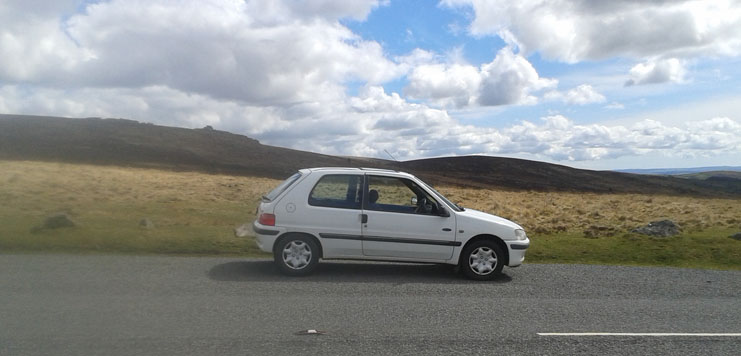
Peugot on Dartmoor
Peugot on Dartmoor

I did manage to explore the fabulous Scilly Isles, ancient haunt of pirates, for the day.  I dined on fish at the ‘Admiral Benbow’ on my return – yes, I know it’s not the real one from the book but it had to be done!  Penzance Youth Hostel was excellent, one of those with a lively sociable lounge and valuable parking space.

If you go to Cornwall in the summer, don’t take a car!  My landscape reading skills tell me that the narrow rocky peninsula is not kind to vehicles.  You can get a whole day’s travel on the buses for the price of an hour’s parking.  If there’s enough of you to fill a car, check parking on Google Streetview, look for reviews.  It’s more of an adventure to go on public transport!

Adventure was the theme at Falmouth Marine Museum.  Sailing out into the unfriendly Atlantic in a wooden ship, with no engines to steer you away from the jagged rocks lining this coast – no wonder so many pubs are furnished with the spoils of shipwreck!  There was a Viking exhibition featured too, a fascinating insight into the everyday lives of these fearsome reavers.
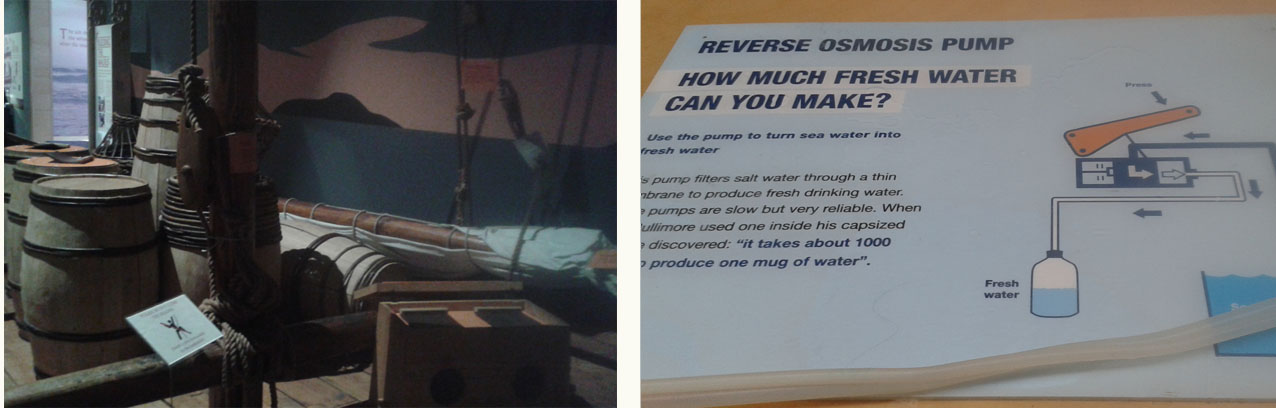
The deck of a seagoing Viking ship and an explanantion of the reverse osmosis method used for drinking water in Malta
The deck of a seagoing Viking ship and an explanation of the reverse osmosis method used for drinking water in Malta

I had to limp home and forego my visit to Tintagel and the nearby town of Boscastle.  The flooding there in 2004 inspired the ‘Strategic National Framework on Community Resilience’ which was an important influence on the Resilience Handbook.  Bringing resilience into play, I renavigated my course to the Bristol Survival School weekend camp to go by bus.

My goal was to learn to use a fire drill, as featured on ‘The Island’.  I achieved that, but also learned that anyone who’s good enough to get a fire going with this method in under ten minutes – and there were a few! – wears a flint and steel around their neck.  Fire drilling doesn’t seem to be the preferred method, and it is very difficult.

I continued my work on identifying burdock in its first year stage, which is when the large tasty roots form.  I’ve nearly nailed down the differences with the poisonous foxglove.  Please don’t go digging up wild plants though, except with the informed permission of the landowner.  Use your Resilience Garden space – even if it’s only patio pots – to cultivate your own forage plants.  You only need to get to know them, maybe try a few…
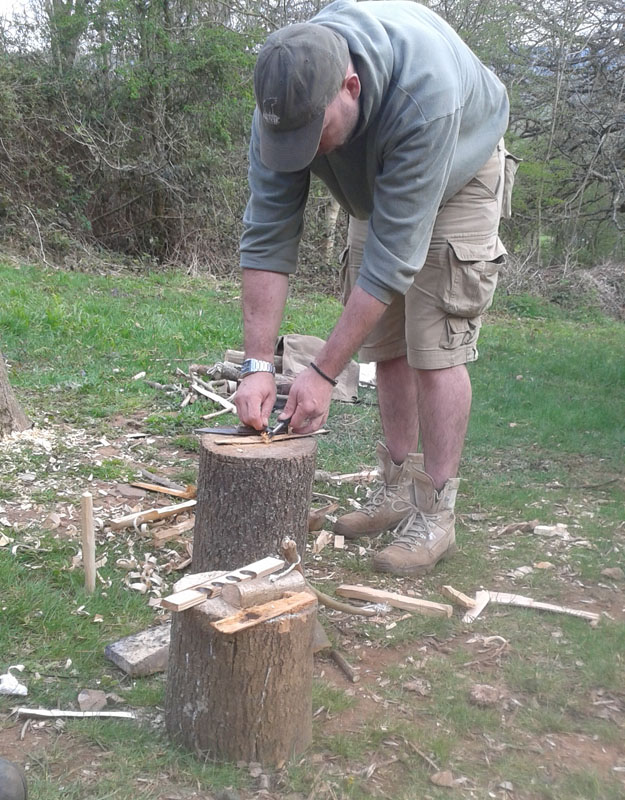
making fire drill

Above, the instructor is carving out a fire drill set from raw wood.  Below, an ember has been lit from the powdered wood created by the drilling process, and has been transferred to a piece of bark.  At this stage you use ’ember extenders’ to nurse it into a larger coal.  This is placed in a hank of dried grass and blown into flame, narrowly missing your eyebrows.
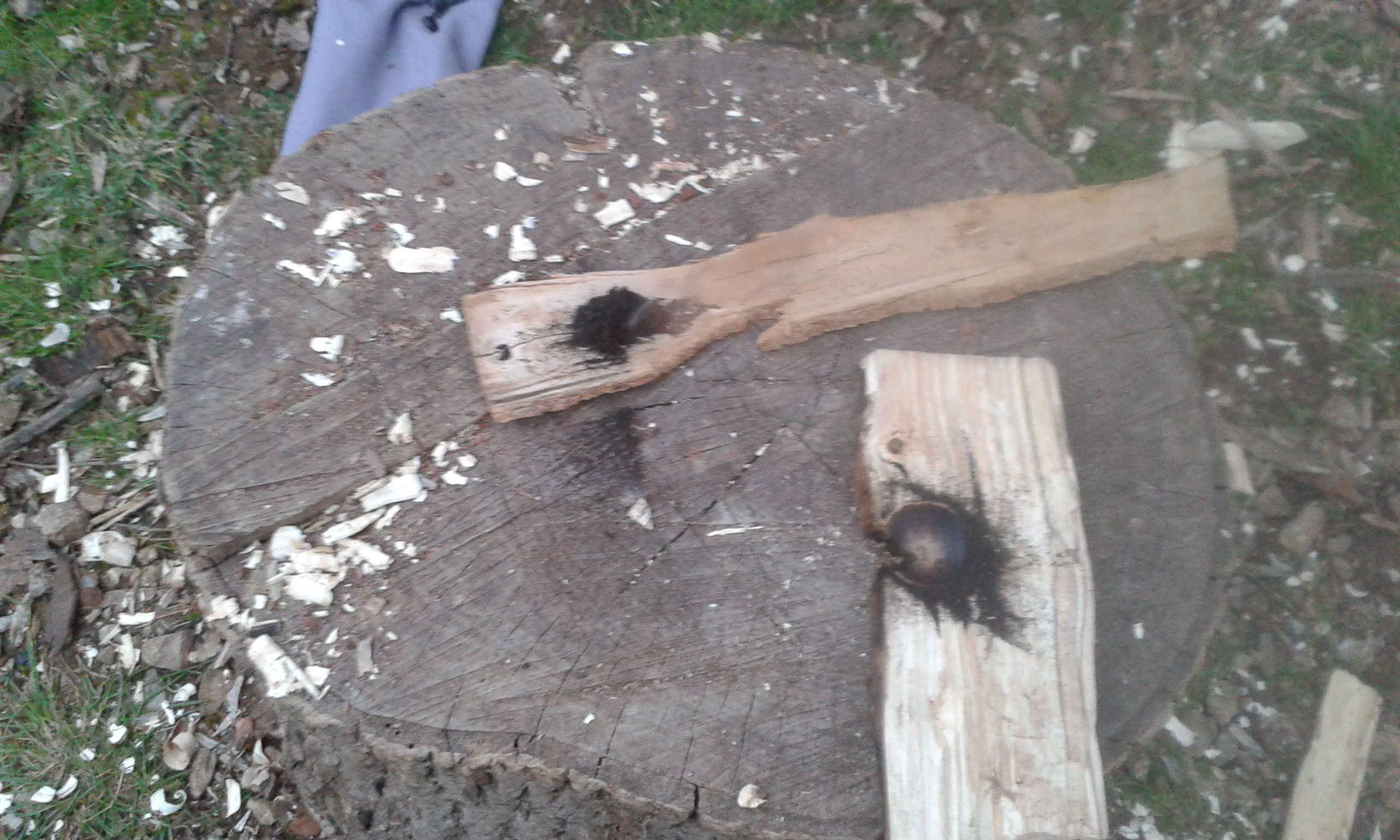
firedrill ember 20160423_200120

Adventures on the Resilience Trail

There was so much going on at the Food Sovereignty Gathering, that there was little time for me to explore the Hebden Bridge area properly. I’d taken a chance mentioning it in the Resilience Handbook (p86) on reputation alone, and wasn’t disappointed.

The Archimedes screw at Hebdon Bridge Mill
The Archimedes screw at Hebdon Bridge

The movement itself turned out to be too concerned with international affairs to really connect with the firmly local criteria of resilience. I met some interesting people and had many productive discussions however.

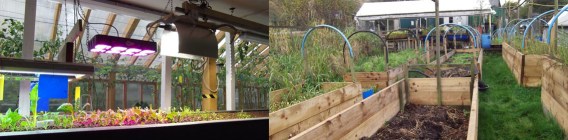
In among the demanding schedule were visits to the key features I wanted to see: the Incredible Farm and the Aquagarden in Todmorden, of which more another time.

aquagarden at Todmorden and Incredible Farm

The Gathering was quite tiring and I needed Tuesday to unwind. Our hostel, being on the Pennine Way, had a great interest in rambling, with a collection of useful maps.

I explored the Hebdon Bridge Loop of the Pennine Way in the company of Helena Paul (author of ‘Hungry Corporations‘). It was an eerie, misty day but the trail was well marked and we wandered up and down the landscape, often on paved ways which must have taken a lot of work.


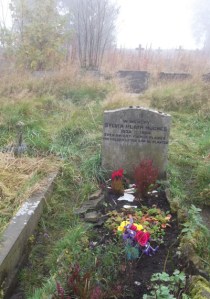
sylvia plath grave at heptonstall

We called at Sylvia Plath Hughes‘ grave in Heptonstall; a place of pilgrimage for her admirers, who are accustomed to leave pens as gifts. It turned out to be the poetess’ birthday, and we learned the history of the site from a fellow author there. Nibbling on Himalyan Balsam seeds, we followed the maze of paths, challenging bullocks for right of way, pausing by the washing pools to look for dippers, and back along the river with its decaying industrial remains.


Off the next day through the nightmare of Manchester outer ring road, a four lane dual highway crawling along in second gear amid a fume of exhausts. This country overcrowded? You bet. The Peak District looks like a rock in a crusher. Arrived with relief at the Anglesey Outdoors hostel with its early morning kayakers. Rather them than me in those waves!

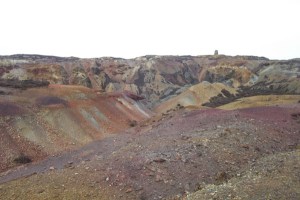
I drove along the coast and visited Copper Mountain instead. The mining operation which reduced this hill to a pile of toxic rubble ceased 150 years ago. All that grows in the sparse acid soil is heather, the only sound of life the occasional apocalyptic crow. It takes two hours to walk around the edge of this tortured landscape, among the rocks drenched with warped and twisted bands of colour, the heaps of pink scree.

copper mountain anglesey

Somewhere in the world this process is destroying another place of former natural beauty. The Internet – an enthusiastic user of copper – comes with a price.

Onwards and decidedly upwards along the west coast of Wales to the Centre for Alternative Technology. I’d been offline since Hebden, so failed to organise a meeting, but the Resilience Handbook I left was well received. I bought a ticket – valid for a whole year! – and explored this iconic establishment for the first time.

It has developed and expanded over the years to a full scale educational facility with over a hundred staff. The fascinating exhibits, set in a lovely natural landscape, cover the whole spectrum of resources from energy provision to waste disposal. I certainly need a return visit to take it all in!

centre for alternative technology fruit trees and solar panels

I spent the night at the Corris Hostel just down the road, where the hostel manager organised a cook out in the forested garden. The visiting party of young singers fom Liverpool were entranced, even abandoning their smartphones to fry sausages and toast marshmallows!

The final stage of my travels took me via Swansea, to supply the nascent Resilience Project there with Handbooks, and so home to a welcome bath.

By using hostels and public transport, a single traveller can take an adventure break very cheaply. Families could pool transport and stay off season in a holiday camp. So it might rain? Adapt. Learn resilience.  Everybody needs adventures.

Diary October 2015

The Resilience Handbook has been out in print for a busy two months now. Distributing and promoting has taken up most of my time – learning to sell books from a standing start! I’m just about to go on tour, heading north through the scary urbanisation of the Midlands to Hebden Bridge for the Food Sovereignty gathering.

poster for Food Sovereignty

I’m planning to stay on and revisit the wonderful people at Incredible Edible Todmorden nearby – I hear their aquaculture project is thriving. Then, taking the North Wales Expressway which I hear so much about on the traffic news, off to explore Welsh bookshops ending up with a visit to the Centre for Alternative Technology at Machynlleth. I hope the weather holds!

No wonder we obsess about the weather in Britain. I’ve had to pack for wet cold, dry cold, unseasonable warmth and days of torrential rain. I could get all or none of these during a ten day walkabout! I’m afraid I drew the line at taking a spade to dig myself out of snowdrifts, as my neighbour advised, though that may turn out to be a false economy.

Packing wasn’t the only weather challenge this autumn. There were two weeks of cold wet weather at the end of August. My optimistic crops of sweetcorn and chickpeas went mouldy where they stood. The slugs multiplied alarmingly, not even bothering to crawl into hiding during the long wet days.

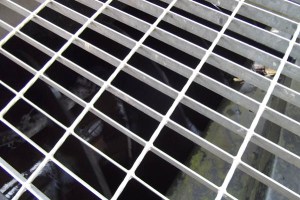
Once things dried out somewhat, I had to clear up the wreckage and deal with Mollusc World Domination. I replaced the stone slab garden bed paths with oven shelves and bits of fireguard; metal grids providing no shelter for them, nor for Ant City. I’m normally quite tolerant of ants, but this year they managed to destroy an entire courgette crop and most of the broad beans with their bug farms. Chemical warfare, however, is just not on the agenda.

The elderberry harvest in early September was upset by this weather; it took far more trips to collect enough for the crucial anti-flu syrup and we may not have a full winter’s supply. Elder trees can exert a great deal of influence over their flowers. They will hold them back as buds during rainy days, then open them like sudden umbrellas as soon as the sun comes out. Much the same applies to their berry clusters.

My friend’s bees didn’t produce enough honey to see themselves over the winter, so they will have to be fed by humans. I don’t know if this was the weather. Perhaps they are on strike against pesticides.

Right. Departure delayed to let the high winds abate, but not for too long or I’ll get entangled in Rush Hour. I just have to check out Knit for the Planet – who are the Woolly Angels? – and pack some wool….

A Note to the Readers who’d like more References

There aren’t many references, footnotes and the like in the Resilience Handbook. I wanted it to be small and light enough to fit in your grab bag for a start. Write your emergency numbers and useful notes in the back, and you’ve got a resource worth carrying!

A few days ago, I watched a film called ‘Pandora’s Promise’ a shameless piece of propaganda for the nuclear power industry. I’ve tried to create an workable emergency plan for civilians caught up in a nuclear plant disaster, so I don’t think the benefits even begin to justify the risk assessment. Besides, the advances in renewables technology and research into the use of thorium make the old style paradigms look so last century.

The film was an exercise in how carefully selected interviews can be mixed with colourful factoids and film clips to present an argument. ‘Scientists talked to me till I changed my mind’. Which scientists? What did they say? Where are the peer reviewed papers to back their opinions up? Were you tied to a chair until you agreed with them? Where are the references?

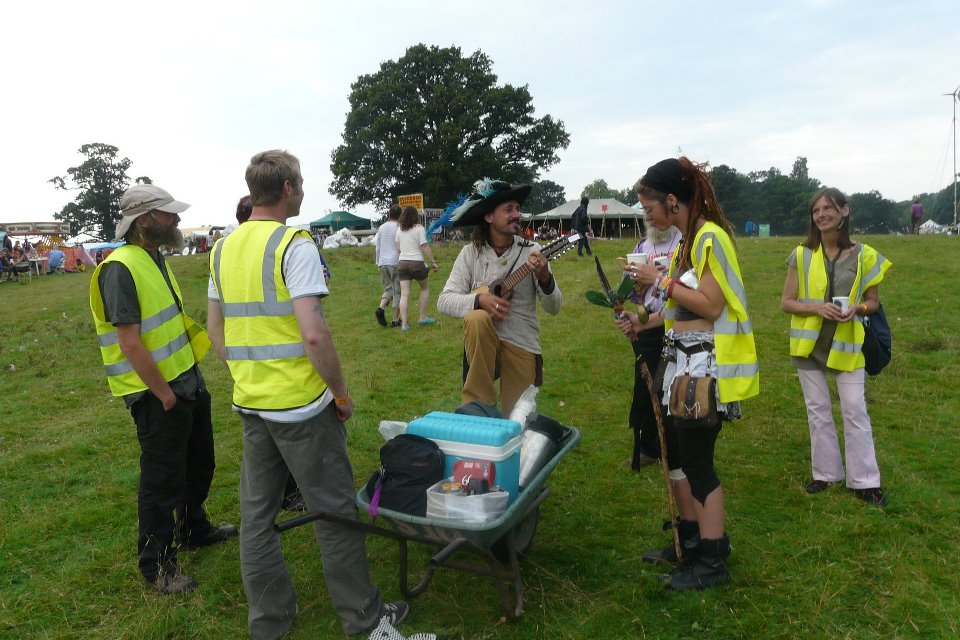
The Resilience Handbook was mainly written by talking to people. People in the bus queue, on the train, in pubs and cafes. Farmers and vegans, pacifists and soldiers, plumbers, teachers, politicians, cheese-makers. Children, parents, grandparents. And of course, our hundreds of splendid event volunteers who gave us feedback on the original booklet.

merry event volunteers

Over the years, certain books have stood out for me as being especially helpful to understanding the wider concepts of resilience. These are listed in the Handbook. When you read these, see which publications they recommend. Follow the knowledge.

It’s the same, only much faster, researching on the Internet. One website leads to another, and before you know it you’ve written an article on breadmaking! I must have visited fifty sites or more for that one. It’s impossible to refer to them all. Some were rather dodgy – dancing adverts, suspiciously long time to load and the like – so I came out of them. Some only had one key piece of information, or repeated stuff from another site.

So it’s difficult to include internet references in a book. Also, they tend to be ephemeral, sliding off into the Dark Net without warning. I thought I’d be on safe ground mentioning Transport Direct, an excellent website run by the government, which let you map a course from here to there using any available means of transport. However, funding was cut and it vanished – fortunately before the final print edit of the Resilience Handbook.

For those of you who like to ask questions – try a search engine – I’m retrieving and putting up the links I found most useful here. It’s taking a while, as quite a few have gone, so I have to trawl through the web for a suitable equivalent. If you let me know when one of these breaks, it’d be helpful.

The Resilience Handbook – out now!

Finally the Resilience Wheel is rolling!!

I’m waiting  for my first order to arrive so I can send copies out to all you good people who have been following its progress – too excited to write, so I’ll let publishers Magic Oxygen explain more.  You can read some of the book with their ‘lookinthebook’ gizmo, and order from them to maximise the benefit to local economies.

Why is that important?  The book explains it all!

Normal blogging will be resumed in due course 🙂


The Methane Saga

The Methane Saga

or

The Production of Methane Gas Described in the British Style of Finnish Epic Poetry

I was listening to a recording of the Kalevala, the Finnish epic poem, while crocheting. These tales were created to be spoken or sung, and I was struck by the way they harmonised with repetitive creative tasks.  One is busy but relaxed; it can be dull without listening to something entertaining.  Hence the popularity of knitting circles.

Imagine an extended family in a snow bound yurt dwelling.  After months together, interesting subjects for conversation may be limited.  How to amuse oneself while making socks or whittling knife handles?

“Tell us a story, Grandparent” comes the call.  Arthritic hands are no longer nimble enough to join in the tasks, but a fireside place is welcome.  And so it begins….

Tales created to be spoken communicate in different ways to those designed for the written word.  If you weren’t paying attention, you can’t turn the page back.  Listening to the Kalevala, I found that momentary focus on my work meant I lost a few lines, but not the gist of the plot.  Even if I had missed some crucial words, important concepts are repeated several times, key events padded out with description.

The ‘Hiawatha’ rhythm in which English translations of these poems are recited seems to bear little relation to the singing of the original.  There’s a sample of this on Wikipedia.  My musings on the ancient origins of epic poems may be mere fiction.

However, author Lewis Dartnell has speculated at length in ‘The Knowledge – How to Rebuild our World from Scratch’ on how we can preserve important scientific discoveries in the event of global catastrophe.  This style of telling seems well adapted to embed this information.  It falls into memory as if it were designed to, and the redundancy guards against attrition.

In the post-apocalyptic landscape, you can bet people will have to knit socks, possibly in a yurtish sort of dwelling. So I wrote the ‘ The Production of Methane Gas Described in the British Style of Finnish Epic Poetry ‘. It’s very long, a good sock’s worth to a fast knitter, so it’s on its own page. I’ll be checking the technical details with the biochar people, but as the epic points out ‘ And with care prevent explosion’!

The Resilience Handbook will be out soon!!

You can place advance orders here

Diary May 2015

This month was something of a landmark as I finally parted with the Leyland Pilot post office van which served me as a mobile HQ during my event organiser days. I gave it to a young crew member, who will have ample opportunity to learn welding on it.

The nucleus of crafters formed during the Free Craft Workshops project are determined to continue some form of meeting. Instead of competing for custom, crafters should unite to reclaim the market for basic household goods. Supporting local businesses needs to become a much larger factor in consumer choices.

Remember, the more local materials are in place, the more resilient an area is.

Following a Resilience Plan isn’t all knitting and gardening. It sends you on adventures too. This month, I went on a day sail on a tall ship as my challenge for Water. The Handbook explains these things in more detail.

The Lord Nelson is part of the Jubilee Sailing Trust, who offer adventure holidays for the disabled. I was very impressed with the adaptations – even a wheelchair lift! – and the excellent crew. Not many people could cross the Atlantic in a three masted sailing ship, yet display such patience and consideration for novices.

I chickened out of climbing the rigging, even though the little old lady volunteer helper assured me it wasn’t as hard as it looked. Steering was more my thing, and I successfully navigated the 400 ton vessel around a lobster pot on the way back in to harbour.

Back to work, with a trip to Hay-on-Wye, where the Book Festival was in full swing. I haven’t been there since the first one back in the late Eighties; it has changed a bit since then!  Accommodation was scarce in Hay itself but a regular shuttle bus ran from Hereford, where I stayed at the excellent Somerville House.

It was fascinating to be among hundreds of people all carrying books, reading while they drank coffee or waited in the queue to hear their favourite author give a talk. I had my eye on getting a signed copy of a Neil Gaiman or David Mitchell book, but the shelves were stripped of these by Friday morning!

I did pick up a copy of the ‘Civil Defense Manual’ from 1950, of which more later.

And so home again, back to the office and the to-do list.

Willows and Flooding

The Somerset Levels have grown willow since prehistoric times; the remains of a basket were found by the Glastonbury Lake Village. Willow trees are plentiful in marshlands as they can thrive in waterlogged soils. Their long flexible shoots have many uses, including furniture, fencing and fish traps.

Traditional methods of pruning, or pollarding, cut the tree back to its main trunk. A shock of long straight withies springs out from the cut, and can be harvested. The trees are quite tall and have a distinctive knobby shape. Pollarded trees need to be maintained, which is difficult when the trimmings have no value.

Many modern willow beds are coppiced. The growth is cut back, even to ground level, every couple of years. Material which could be used for craft products is burned as biomass fuel. Willow beds established by grant funding have no budget for upkeep.

The Levels grew nearly 40 square kilometres of willow in 1930, but this has declined to a mere 1.4, mainly due to replacing basketry with disposable bags and packaging. Garden furniture is made from imported, oil based plastic and most people would struggle to recognise a fish trap.

Planting willow around the banks of rivers stabilises them, and can be extended into a buffer zone. This would aid the retention of water in a managed flood plain, protecting urban land further downstream. Willow is particularly good at removing toxins from contaminated land. It could be planted straight after a major flood, but it won’t be, as no-one can earn a living from it.

The decline of willow production needs to be reversed by creating a market.

The storms that often accompany flooding have wreaked havoc on garden fencing. Tall solid panels which resist the wind have fallen in heaps. Woven willow fencing allows the light and air through, while affording privacy.

Order some from a local willow craftsperson. It will be more expensive than cheap imported products. If you have a garden and a fence, though, it makes sense to support the farmers upstream who are preventing them flooding. Think about what else you could replace with locally sourced willow.

Alternatively, find a project which needs help with coppicing and negotiate your own materials.  Carymoor Environment Trust in Somerset have a volunteers’ day every Tuesday.

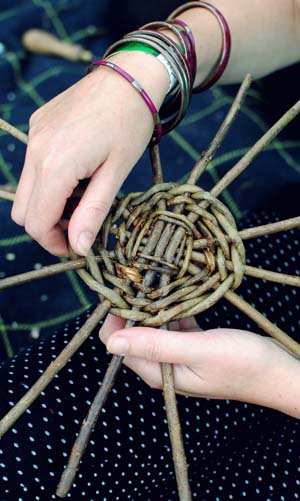
willow crafts