Category Archives: resilience

Now the Carnival is Over…

Crowds gather on the pavements among the chip stalls and candyfloss vendors, along comes the marching band, the radio van, the glittering phalanx of motorcycles decked out in swirls of LEDs.
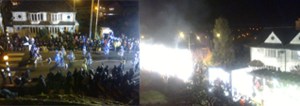
somerset guy fawkes carnival 1

The sound of music, the river of light reflects on the sky as the waiting pageant powers up along the bypass – and the first great float heaves into view.
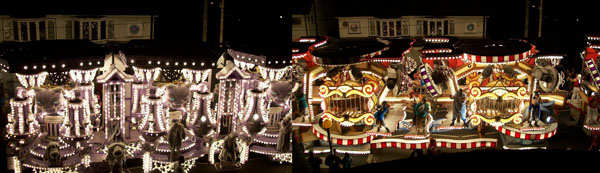
carnival floats somerset

Up the narrow High Street they pass – dancing girls and solemn statues, whirling steam punk cogs and horses frozen in mid stride, mighty warriors and young farmers in drag. This is their moment, the pinnacle of preparation!

Who else is crazy enough to hold a Carnival in November? Bracketed by gales and lashing rainstorms, Saturday night was dry but freezing. The huddled spectators make an equal commitment to seeing the event through. Road closures and traffic control mean they cannot easily leave, come wet or cold. You take your chances, and the right equipment – resilience in action!

The Carnival covers several towns, quite far apart. Sometimes, when driving along pitch dark country roads in the hammering rain, one sees the secret movements of these mighty machines. They glide past you in convoy, eerie on running lights alone. A flash of grinning jokers, snarling dragon jaws, giant clocks – they are gone into the night.

And then it’s over. The floats return to their obscure sheds, the costumes are packed away. The coalman is just a coalman again and the tractors return to work. Somerset turns its attention to the next festival on the calendar. The Christmas lights can be safely strung across the streets and the fourth year of our Buy Local for Xmas campaign begins!

buy local for xmas

Support your local crafters – the community needs to encourage their skills. Make your gifts budget count, they’re relying on you!

Diary October 2015

The Resilience Handbook has been out in print for a busy two months now. Distributing and promoting has taken up most of my time – learning to sell books from a standing start! I’m just about to go on tour, heading north through the scary urbanisation of the Midlands to Hebden Bridge for the Food Sovereignty gathering.

poster for Food Sovereignty

I’m planning to stay on and revisit the wonderful people at Incredible Edible Todmorden nearby – I hear their aquaculture project is thriving. Then, taking the North Wales Expressway which I hear so much about on the traffic news, off to explore Welsh bookshops ending up with a visit to the Centre for Alternative Technology at Machynlleth. I hope the weather holds!

No wonder we obsess about the weather in Britain. I’ve had to pack for wet cold, dry cold, unseasonable warmth and days of torrential rain. I could get all or none of these during a ten day walkabout! I’m afraid I drew the line at taking a spade to dig myself out of snowdrifts, as my neighbour advised, though that may turn out to be a false economy.

Packing wasn’t the only weather challenge this autumn. There were two weeks of cold wet weather at the end of August. My optimistic crops of sweetcorn and chickpeas went mouldy where they stood. The slugs multiplied alarmingly, not even bothering to crawl into hiding during the long wet days.

Once things dried out somewhat, I had to clear up the wreckage and deal with Mollusc World Domination. I replaced the stone slab garden bed paths with oven shelves and bits of fireguard; metal grids providing no shelter for them, nor for Ant City. I’m normally quite tolerant of ants, but this year they managed to destroy an entire courgette crop and most of the broad beans with their bug farms. Chemical warfare, however, is just not on the agenda.

The elderberry harvest in early September was upset by this weather; it took far more trips to collect enough for the crucial anti-flu syrup and we may not have a full winter’s supply. Elder trees can exert a great deal of influence over their flowers. They will hold them back as buds during rainy days, then open them like sudden umbrellas as soon as the sun comes out. Much the same applies to their berry clusters.

My friend’s bees didn’t produce enough honey to see themselves over the winter, so they will have to be fed by humans. I don’t know if this was the weather. Perhaps they are on strike against pesticides.

Right. Departure delayed to let the high winds abate, but not for too long or I’ll get entangled in Rush Hour. I just have to check out Knit for the Planet – who are the Woolly Angels? – and pack some wool….

A Call to Action!

Today most people in Britain live in cities, in an environment constructed by other people, surrounded by things made by people.

It’s easy to become detached from the underlying reality, to feel that complaining about something on social media is radical problem solving behaviour. That if things aren’t going your way, somewhere there is another human being who is responsible for this, who needs to be goaded into doing something about it.

There is. It’s you.

The modern world is so vast and complex that it defies understanding and control. The authority figures you set up and love to hate have no more idea how to cope than you do. Often their core skill is in clawing their way to the pole position in a group.

You put them there.

By abdicating your continuing responsibility to participate in this understanding and control, you keep them there. Struggling to satisfy the needs of millions, while fending off predatory interests from outside. Nobody can succeed in this role.

Their only hope is to simplify everything. Let food be produced by huge farming industries, processed by a single firm, distributed through a vast network owned by one person. Then all the people they need to talk to can meet in one room. There is the comforting illusion of being in control of the situation.

If you’re happy to be painted grey, to fit in a box, to be collateral damage in someone else’s movie, then that’s fine. That’s where it’s all going; just keep calm and carry on.

Or start paying attention.

You can deplore the effect of supermarkets on the local economy – did you vigourously oppose their planning applications? – but are you still using them? Convenience is a word with a lot to answer for. Go exploring for alternatives. Make food an adventure!

When a chain store closes, is your community poised to replace it with a locally owned co-operative? Would people spend their money there to keep it going, to keep wealth in the area? If not, why the hell not?

It’s difficult and complicated to work this out. Food is only one of the factors you need to consider when reclaiming your responsibility. I wrote the Resilience Handbook to show you how to make a really good beginning to this process. It’s packed with information which you can research in more depth – almost every paragraph unfolds into a whole article, a speech, a coherent argument. The key feature though is the call to action, gaining the practical knowledge you need to develop by doing things.

You don’t get fit by talking about exercise.


A Resilience Adventure

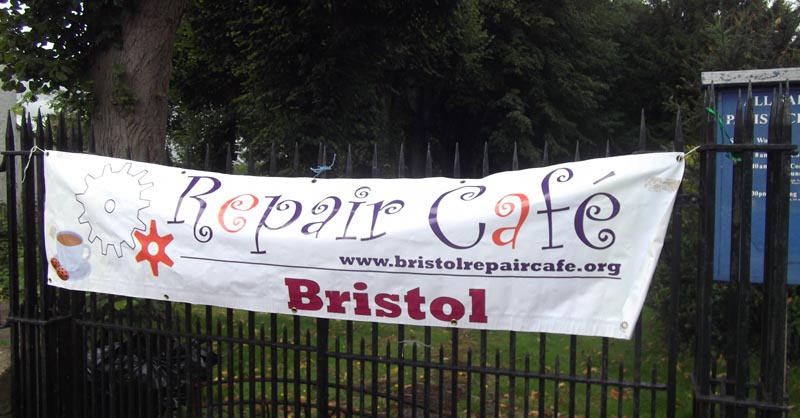
One of the adventure challenges in the Resilience Handbook is ‘Visit a Repair Cafe and have a cup of tea.’ My budget didn’t stretch to a trip to Amsterdam or Germany, so I looked online and found the nearest one, in Bristol. This is held on the first Saturday morning of every month in All Saints’ Church, Fishponds.

I set off on the bus – I try not to take the car into cities – and navigated to the venue with the aid of my trusty A-Z map book. It took longer than I thought, and most of the actual repairing was finished before I arrived. There was tea though, and cake, courtesy of the church volunteers. I had a good chat with the organiser, Kate, and presented her project with a copy of the Handbook. It’s a pity there isn’t a branch of Repair Cafe nearer home!

Repair cafe banner

The networking potential of these meeting places was quickly demonstrated. Hearing me talk about resilience inspired a young lady to take me to the Feed Bristol Harvest Fair, a short walk away.

This event was so fabulous it was almost surreal! I felt as if I’d been transported into a Transition vision of a post-oil resilient community!

The Welcome gazebo was surrounded by tables of the most intriguing plants for sale – I couldn’t resist the Vietnamese Fish Mint – beyond which stretched polytunnels and plots under cultivation. Further in, excited children raced around tiny woodland paths, played in the sandpit, made paintings using mud and colourful flowers. Adults strolled more sedately, exploring the roundhouse, the herbal gardens, the tree plantings.

One could sip Fair Trade tea in the open marquee while listening to a string quartet playing in the autumn sunshine. It was a glorious day!

feed bristol harvest fair

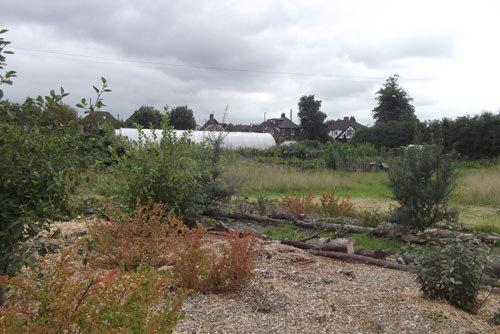
The growing area – due to restrictions on images of children, I can’t show the actual fete, but there’s plenty of pictures on the websites

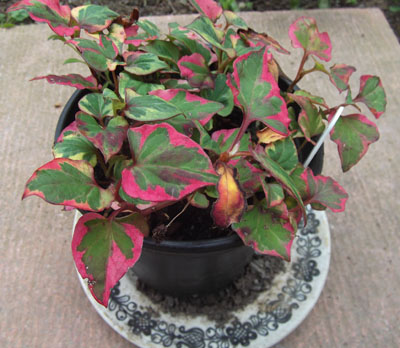
vietnamese fish mint

Vietnamese fish mint is not a mint, but does taste of fish!  And it’s very pretty.

At the Harvest Fair, I spoke with soap makers, food cooperative organisers, gardeners and teachers. The project is run by Avon Wildlife Trust; the remit is to create an edible yet wildlife friendly landscape, and it works very well. As I listened to the people who worked there, I began to realise that this project utilised the same core concepts as a Resilience Garden!

  • for use by the surrounding community
  • an emphasis on education, demonstration and experimentation
  • the abillity to produce large amounts of seed and spare plants to fast track other growing spaces in a crisis
  • creation of an edible landscape which supports a positive relationship with local wildlife, especially friendly insects and birds

Although defining a Resilience Garden is a struggle, I know one when I see it!

Areas like this should be a key feature in every housing development.

A Note to the Readers who’d like more References

There aren’t many references, footnotes and the like in the Resilience Handbook. I wanted it to be small and light enough to fit in your grab bag for a start. Write your emergency numbers and useful notes in the back, and you’ve got a resource worth carrying!

A few days ago, I watched a film called ‘Pandora’s Promise’ a shameless piece of propaganda for the nuclear power industry. I’ve tried to create an workable emergency plan for civilians caught up in a nuclear plant disaster, so I don’t think the benefits even begin to justify the risk assessment. Besides, the advances in renewables technology and research into the use of thorium make the old style paradigms look so last century.

The film was an exercise in how carefully selected interviews can be mixed with colourful factoids and film clips to present an argument. ‘Scientists talked to me till I changed my mind’. Which scientists? What did they say? Where are the peer reviewed papers to back their opinions up? Were you tied to a chair until you agreed with them? Where are the references?

The Resilience Handbook was mainly written by talking to people. People in the bus queue, on the train, in pubs and cafes. Farmers and vegans, pacifists and soldiers, plumbers, teachers, politicians, cheese-makers. Children, parents, grandparents. And of course, our hundreds of splendid event volunteers who gave us feedback on the original booklet.

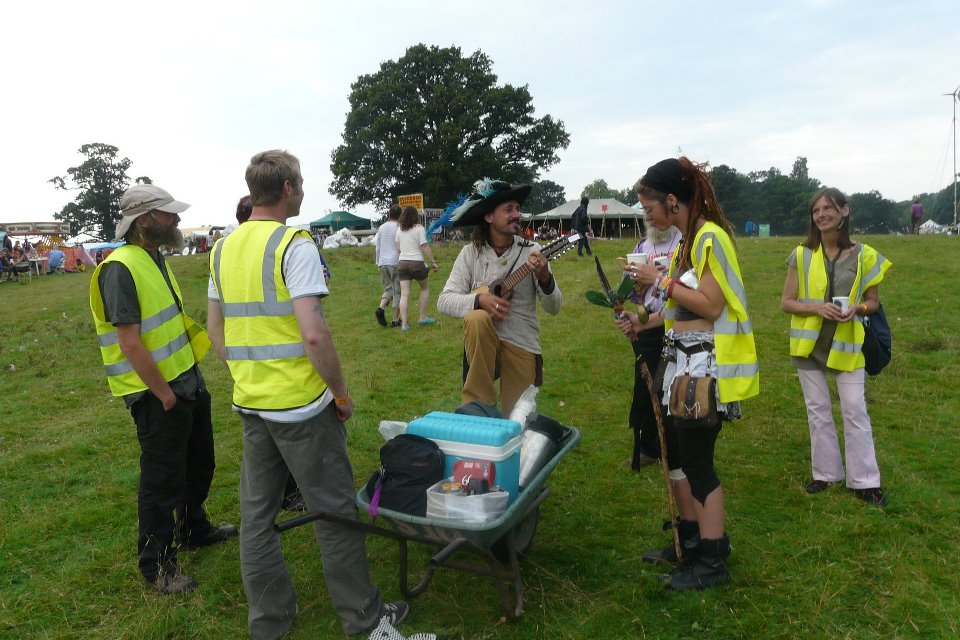
merry event volunteers

Over the years, certain books have stood out for me as being especially helpful to understanding the wider concepts of resilience. These are listed in the Handbook. When you read these, see which publications they recommend. Follow the knowledge.

It’s the same, only much faster, researching on the Internet. One website leads to another, and before you know it you’ve written an article on breadmaking! I must have visited fifty sites or more for that one. It’s impossible to refer to them all. Some were rather dodgy – dancing adverts, suspiciously long time to load and the like – so I came out of them. Some only had one key piece of information, or repeated stuff from another site.

So it’s difficult to include internet references in a book. Also, they tend to be ephemeral, sliding off into the Dark Net without warning. I thought I’d be on safe ground mentioning Transport Direct, an excellent website run by the government, which let you map a course from here to there using any available means of transport. However, funding was cut and it vanished – fortunately before the final print edit of the Resilience Handbook.

For those of you who like to ask questions – try a search engine – I’m retrieving and putting up the links I found most useful here. It’s taking a while, as quite a few have gone, so I have to trawl through the web for a suitable equivalent. If you let me know when one of these breaks, it’d be helpful.

The Resilience Handbook – out now!

Finally the Resilience Wheel is rolling!!

I’m waiting  for my first order to arrive so I can send copies out to all you good people who have been following its progress – too excited to write, so I’ll let publishers Magic Oxygen explain more.  You can read some of the book with their ‘lookinthebook’ gizmo, and order from them to maximise the benefit to local economies.

Why is that important?  The book explains it all!

Normal blogging will be resumed in due course 🙂


Borage and Brie Tart

The beautiful blue or white flowers of borage are a lovely feature of the Resilience Garden. They currently add colour to the patch of seeding cress, and are very attractive to bees.

cress and borage resilience garden

Borage is relentlessly self-seeding. Fortunately the leaves are edible and a regular cull of small plants yields plenty for this recipe. The other important ingredient is a chunk of cheap soft cheese – Brie, Camembert, goat’s cheese – which you’ve picked up on offer.

I found some Somerset Brie at the Farmers’ Market, and it was time for some selective weeding.

The Recipe

Collect a colander full of young borage leaves. Wash, lightly shred, and steam for about ten minutes until they are quite soft and merged into a pulp. Make a shortcrust pastry base and bake it blind. I’d use a small dish to try this out, about 8” across, which takes a mix of three ounces of fat to six ounces of plain flour.

Spread a layer of steamed borage across the cooked pastry base, between half and one centimetre thick. Now do your best to slice the soft cheese and cover the layer of borage with it. Settle for dotting chunks on the tart if you have a particularly resistant cheese; it will melt.

Bake it on the middle shelf of a medium oven until the cheese has melted to your satisfaction while the pastry edges remain unburnt. It takes twenty minutes or so, if you work while everything is still hot.

Adding Things

This is the basic structure of the borage cheese tart, to which you can add by foraging. For this one, I foraged a red onion from the vegetable basket and a few rashers of smoky bacon neglected by the lodger. These were finely chopped and fried up together, then stirred into the steamed borage. While in the garden, I’d found a couple of early courgettes. Thinly sliced, these made another layer on top of the borage.

We had the tart cold, with new potatoes from a tyre stack and salad leaves from the greenhouse next door; the meal fed three adults. Even the weeds in the Resilience Garden are useful!

Festival Camping!

Camping at an event is a good challenge for your resilience!

At Glastonbury and other large festivals, it often begins with the marathon dash from a remote car park to secure a good camping spot. It’s worth looking for maps and tips online to plan your route. The best fields may be already full; have a few options ready. You’ll need to be carrying your tent, some drinking water and enough equipment to last the night. Give yourself the option of going back for the rest next day.

If you’re coming as a group, plan how to share equipment, organise cooking and hot water together. You’ll need to get water for your camp from one of the standpipes. Think how you’ll manage this.

Remember that candles, tea lights and incense are fires and need careful attention. Never leave them lit anywhere if you go out. Don’t use a candle to light up a small tent. Use battery powered LED lights instead.

NEVER BRING A BARBECUE OR CHARCOAL BURNER INDOORS. The carbon monoxide can kill you. If you’re cold at night, hot water bottles are much safer.

Put your tent up at home before you leave to find out if it is still all there, not with rips and bits missing. Small tears can be fixed with gaffer tape, but make sure the fabric is dry first. Bring extra tent pegs and remember something to hammer them in with. Keep guy ropes as short as possible on site or people may trip over them.

Facing your tents inwards if you’re camping in a group is more friendly, but have a dressing gown, there’s bound to be something you need in the middle of the night when people are still sitting around. You could put a windbreak around the front of your tent for an extra porch and private washing space if you’re camping alone.

Please keep your camp site tidy. Bring a few carrier bags with you and empty them regularly. Pay particular attention to making your rubbish ‘wildlife safe’.

festival camping

Near the top of every event ‘how to camp’ page is a warning not to bring valuables. Don’t bring valuables. Even if an event has a very low crime rate there are other hazards. If something fell out of your bag in the long grass or in a dimly lit venue area it may be gone for good.

A slim line money belt is handy, light weight combat style trousers or pocket belt are all useful. You can expect uneven ground, so bring sturdy shoes. Wearing high heels in a field is an art, which should be practised before trying it in public! Bring a day bag to carry supplies and shopping while you’re out and about, preferably one you can wear like a rucksack. It’s only too easy to put it down and forget it. You could write your mobile number, name and postcode inside the flap just in case.

Conserve your phone battery by turning all the settings down. There are often long queues at the charging stations. Nylon tents aren’t soundproof; late at night when all is quiet, be aware that quite a few people will be able hear your personal conversations! Use an earpiece to listen to music in your tent.

It’s always worth doing a bit of research into an event you’re planning to camp at. Read the terms and conditions – if you are relying on using a camping gas cooker, you should check whether the gate staff will confiscate it! Talk to someone who’s been there or have a look at forum posts.

You’ll have more fun if you look after yourself and plan to live comfortably while partying!


The Methane Saga

The Methane Saga

or

The Production of Methane Gas Described in the British Style of Finnish Epic Poetry

I was listening to a recording of the Kalevala, the Finnish epic poem, while crocheting. These tales were created to be spoken or sung, and I was struck by the way they harmonised with repetitive creative tasks.  One is busy but relaxed; it can be dull without listening to something entertaining.  Hence the popularity of knitting circles.

Imagine an extended family in a snow bound yurt dwelling.  After months together, interesting subjects for conversation may be limited.  How to amuse oneself while making socks or whittling knife handles?

“Tell us a story, Grandparent” comes the call.  Arthritic hands are no longer nimble enough to join in the tasks, but a fireside place is welcome.  And so it begins….

Tales created to be spoken communicate in different ways to those designed for the written word.  If you weren’t paying attention, you can’t turn the page back.  Listening to the Kalevala, I found that momentary focus on my work meant I lost a few lines, but not the gist of the plot.  Even if I had missed some crucial words, important concepts are repeated several times, key events padded out with description.

The ‘Hiawatha’ rhythm in which English translations of these poems are recited seems to bear little relation to the singing of the original.  There’s a sample of this on Wikipedia.  My musings on the ancient origins of epic poems may be mere fiction.

However, author Lewis Dartnell has speculated at length in ‘The Knowledge – How to Rebuild our World from Scratch’ on how we can preserve important scientific discoveries in the event of global catastrophe.  This style of telling seems well adapted to embed this information.  It falls into memory as if it were designed to, and the redundancy guards against attrition.

In the post-apocalyptic landscape, you can bet people will have to knit socks, possibly in a yurtish sort of dwelling. So I wrote the ‘ The Production of Methane Gas Described in the British Style of Finnish Epic Poetry ‘. It’s very long, a good sock’s worth to a fast knitter, so it’s on its own page. I’ll be checking the technical details with the biochar people, but as the epic points out ‘ And with care prevent explosion’!

The Resilience Handbook will be out soon!!

You can place advance orders here

Diary May 2015

This month was something of a landmark as I finally parted with the Leyland Pilot post office van which served me as a mobile HQ during my event organiser days. I gave it to a young crew member, who will have ample opportunity to learn welding on it.

The nucleus of crafters formed during the Free Craft Workshops project are determined to continue some form of meeting. Instead of competing for custom, crafters should unite to reclaim the market for basic household goods. Supporting local businesses needs to become a much larger factor in consumer choices.

Remember, the more local materials are in place, the more resilient an area is.

Following a Resilience Plan isn’t all knitting and gardening. It sends you on adventures too. This month, I went on a day sail on a tall ship as my challenge for Water. The Handbook explains these things in more detail.

The Lord Nelson is part of the Jubilee Sailing Trust, who offer adventure holidays for the disabled. I was very impressed with the adaptations – even a wheelchair lift! – and the excellent crew. Not many people could cross the Atlantic in a three masted sailing ship, yet display such patience and consideration for novices.

I chickened out of climbing the rigging, even though the little old lady volunteer helper assured me it wasn’t as hard as it looked. Steering was more my thing, and I successfully navigated the 400 ton vessel around a lobster pot on the way back in to harbour.

Back to work, with a trip to Hay-on-Wye, where the Book Festival was in full swing. I haven’t been there since the first one back in the late Eighties; it has changed a bit since then!  Accommodation was scarce in Hay itself but a regular shuttle bus ran from Hereford, where I stayed at the excellent Somerville House.

It was fascinating to be among hundreds of people all carrying books, reading while they drank coffee or waited in the queue to hear their favourite author give a talk. I had my eye on getting a signed copy of a Neil Gaiman or David Mitchell book, but the shelves were stripped of these by Friday morning!

I did pick up a copy of the ‘Civil Defense Manual’ from 1950, of which more later.

And so home again, back to the office and the to-do list.