Category Archives: resilience

Resilience Soup

Watching ‘The Island with Bear Grylls’, it appears that apathy caused by culture shock can lead seamlessly to exhaustion from lack of food calories. Part of a Resilience Plan is to keep a small store of tinned and dried supplies. I recommend keeping enough for three weeks, if you have the space.

Inspired to inspect my own collection, I found it was a bit haphazard and resolved to organise it. Counting calories and working out recipes…. I’ll have to write another book.

The stores have to be rotated as sell by dates are reached. Check through them every three months, take out anything that needs used before the next check, rearrange and restock. Never store food you don’t like. Storage conditions are often far from ideal; lofts suffer from stifling summer heat and freezing winters. You couldn’t store butter, for example.

If you ever need to rely on your stores, it’s useful to do some menu planning. Here’s one recipe..

Resilient Lentil Soup

A large pan. This recipe is easier to make in larger amounts. A tablespoon of cooking oil, some tamari (soy sauce). If you have any fresh meat or onion type vegetables to add, chop them up and lightly fry them.

If you are lucky, you may have some stock; otherwise add hot water and a couple of stock cubes. Add about four ounces [112g] of dried red lentils. Don’t pre-soak them.

How much liquid? Depends how many people you want to feed; this recipe is enough to fill four bowls. Remember the lentils will soak up some of it. If you have any root vegetables, put them in now. Grated carrot is nice.

Stir. Bring it to a low boil, then turn the heat right down and let it simmer. Mind it doesn’t stick; pans with thick bottoms are best for this work. Stir in four teaspoons of instant gravy mix and a quarter 130g tube of tomato puree. Keep an eye on the sticking as the soup thickens. You can add more water at any point.

Add any green leafy veg, shredded, just before the end. The soup is done when the lentils are soft, but can be kept simmering to wait for people for as long as you care to keep stirring it.

This soup really needs to be kept in a cold place to last over two meals, so it’s best made fresh and left overs eaten early the next day. Without the added fresh food, this recipe provides an unimpressive 550 calories* between four. If you’re completely unable to access any other ingredients, increase the lentils.
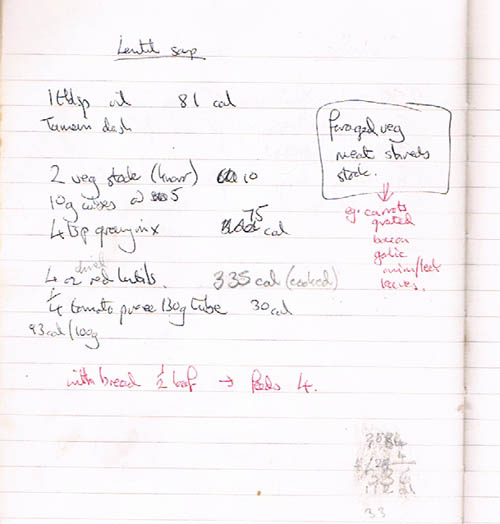
lentil soup calories
*all calculations are strictly back-of-the -envelope

However, what of your neighbours who don’t have stores? Remember, freezers depend on electricity. Could they help you forage to add to the meal? Bacon goes very well with this recipe; it may be available after less thoroughly preserved meats have spoiled.

A basic soup provides an expandable framework for a variety of fresh food.

Resilience.

There’s quite a lot to it.
May Day in Glastonbury

May Day – known by ‘rustics and dwellers on the heath’ as Beltane – has been a big celebration in Glastonbury for many years. People begin to gather around the Market Cross in late morning. Some are garlanded, or painted green and festooned with foliage. Singers and drummers arrive, the druids and bards in their regalia.

At exactly the right time, the rune carved Maypole is lifted onto the shoulders of the Men of Glastonbury, who felled and trimmed the tree it came from. They carry it up the High Street to the place where the Red and White Springs meet, on Chalice Lane. A merry throng follows them; children, elderly wizards leaning on their staffs, local politicians, gardeners, mechanics….

Everyone pauses at the Springs, to drink and mingle, to hear the next episode of the Summer story being told. Outside there is dancing in the sun, but in the dark pillared cavern of the Wellhouse there is an eerie, otherwordly atmosphere. The reflections of dozens of candles ripple in the flowing water, illuminating strange icons, masked and horned, in shadowy alcoves.

The place echoes with a wordless singing. No-one is performing. It is the separate voices of the people wandering gently around the maze of pools, each lifting up their voice in a single note as they pass through.

The occasional traffic becomes impatient, and the motley crowd moves on to Bushy Coombe. The hole for the Maypole is already waiting – dug by the Women of Glastonbury, of course. A huge circle froms around the May Queen with her consort and entourage. The chief druid steps forward and calls upon the elements, personified by costumed celebrants. The Green Men ready themselves to lift the pole as the Queen attaches the ribboned crown.

“I like your pole,” she says to the King.

“It’s a very long one,” he replies slyly.

Up goes the Maypole, wedged securely in place. A brief instruction on the dance follows but, since everyone is welcome to have a go, it is soon a round of happy chaos. One of the bards sees to the loose ends, while the others prepare to close the ceremony. They dismiss the elements with thanks; the Royal Pair retire to their willow bower to dispense honey cakes and mead.

Gradually the participants drift away, heading home in their bright clothes like windblown confetti, to the wonder of passing tourists.

Resilience and The Island

The Island is a TV series designed and presented by survival expert Bear Grylls. Fourteen men and fourteen women are marooned on separate Pacific islands with the minimum of training and equipment. They have to work out how to survive there for six weeks.

Watching the teams of ordinary Westerners struggle in the wilderness is a good resilience exercise. Could you have avoided their mistakes?

How much would previous learning count? Practical experience with a fire drill? Quite a lot. Trees can’t grow fast enough to let everyone become expert at forest shelter building, though.

And when would you need this skill? If you find yourself in a survival situation, it probably won’t be on a remote Pacific island. It’ll be more like a weirdly twisted version of your current comfort zone. The electricity won’t come out of the walls any more, and the taps are dry.

Attitude is everything when it comes to resilience. The people in the series weren’t fast enough to realise that they were in danger. Relentless attention to fire, water and shelter is no longer part of our lifestyle in Britain. People forget how much work it is, and that you can’t relax until it’s done.

Following a Resilience Plan increases your awarenesss of the facilities you take for granted, and highlights things you ought to work on.

Although I’m able to use a flint and steel efficiently, I’ve never tried lighting a fire with a bow drill. It could be important and it’s certainly interesting, so I’m going to target it in my plan under ‘Emergency Planning’. Then I’ll be reminded of this resolution until I actually carry it through. No matter how good you are at survival skills, there’s always something new to learn!

There’s a lot of focus on what the Island participants did wrong, but there’s one thing they all got spectacularly right. They were brave enough to have a go. It’s said that a picture is worth a thousand words – a TV series is a shortcut to hours of explanation.

Study the mistakes of others, realise what you ought to know, set about learning it, find a way to practise it.

Resilience is about doing as well as knowing.

International Downshifting Week

This week, April 20th – 26th, is International Downshifting Week.

“InterNational Downshifting Week is a non-profit awareness campaign designed to help you slow down your pace, lean towards the green and get a better handle on the work/life balance in favour of life.

It was founded in 2003 by contented downshifter Tracey West, who believes a little downshifting can have a powerful impact on your physical health, your mental well-being, your relationships with colleagues, family and friends; it can even improve your sex life.”

Find out more here.


How the craft workshops are getting on

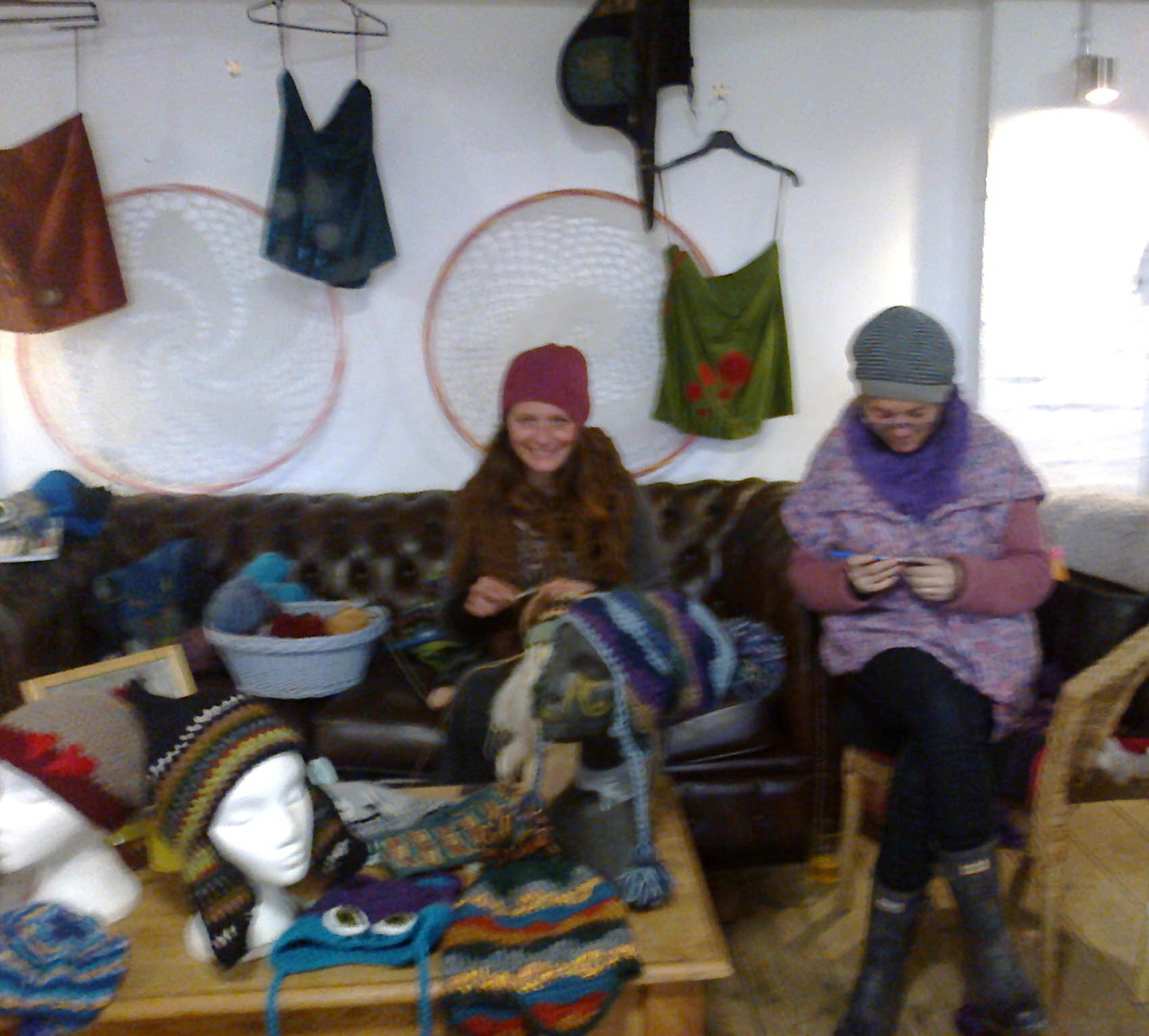
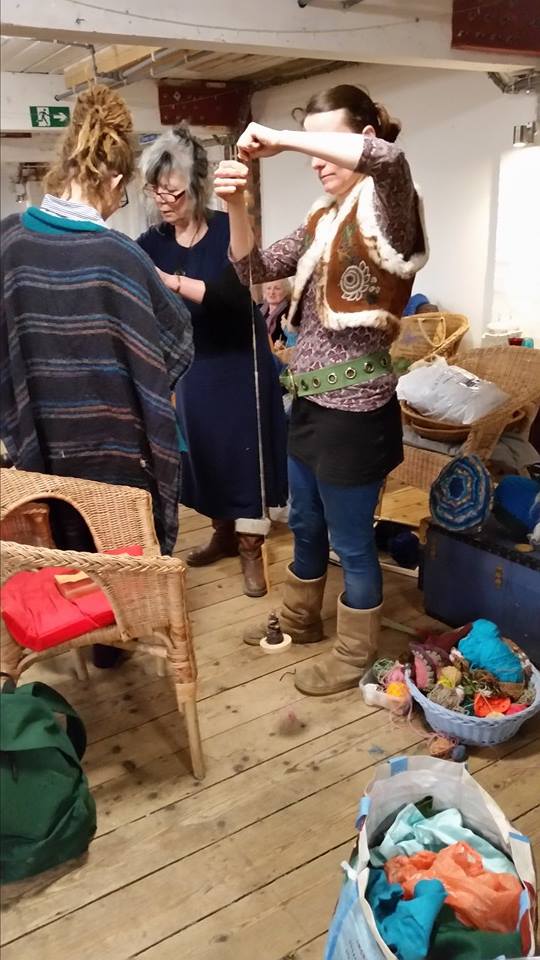
It occurs to me that people may not be notified of changes to other pages, so I thought I’d just draw your attention to the progress of the free craft workshops.  We held the third of these yesterday (15th March), and there’s still another three.  Follow the link to read how things are going.

If you’re in the area – Glastonbury or Street – try and drop in.  There’s the Bocabar cafe next door; you’re welcome to just sit with a coffee and watch the crafts happening!  Although large, the Event Space is warm and there is plenty of parking nearby.

drop spindle workshop crochet workshop

Diary February 2015

It’s been a quietly busy winter.

I finally paid attention to completing my English teaching course before the deadline, and was awarded the certificate with its shiny hologram. The grammar section was surprisingly challenging, even for someone with an ‘old-school’ education!

Still looking for a distraction from waiting for the Resilience Handbook to work through the publishing process, I set up a series of free craft workshops. Reskilling is a vital part of resilience plannning.

So are adventures.

‘Why don’t you come to the Lyme Regis LitFest?’ said Tracey, my publisher.

Why not? It is the sort of excursion expected of a writer, and I could meet many of my fellow authors from the Magic Oxygen stable.

I stayed at nearby Monkton Wyld Court, a hostel and education centre. The peaceful community of today is a contrast to its lively decades spent as a St Trinian’s style progressive school.

Arriving early, I spent a day wandering along the Jurassic shore, admiring the delicate outlines of ancient ammonites sketched on the mudrocks, collecting driftwood and flotsam for art works. The air was cold, the stony beach quiet apart from the tapping of fossil hammers.

A literary festival turns out to be just the sort of event a writer enjoys. There were some excellent lectures and discussions, although I had to miss the weekend programme. Meeting authors and having the chance to leaf through a book is far more satisfying than buying online, or selecting from the promoted range of titles in a supermarket.

Home in time to deal with the final details of the first craft workshop session, which went very well. I had been prepared to sit there on my own if necessary, but there were over forty visitors during the afternoon, despite the problems we’d had getting publicity out.

Next craft workshop day is 1st March….next adventure may well be a day trip on a tall ship.

Diary, December 2014

The Resilience Garden glitters with frost, which should finally put a stop to the ravages of slug and snail. The September rocket sowing bolted due to the warm weather, a November replacement sprang up with enthusiasm but then settled down to wait out the winter as seedlings, and the molluscs ate most of the spinach.

Feeding the leeks has worked, though.

Waiting for a book to get published is an arduous task. I’m using the time to develop my own Resilience Plan some more.

This has involved me in adventures with an anti mould paint based on calcium hydroxide. The resilience pioneer can study the manufacture of this and other basic chemicals in The Knowledge. Use your Xmas tokens. It’s a good ‘man book’.

I’ll be appearing on The Knowledge website as a guest writer in the New Year, covering some of the amazing projects I’ve found on my travels!

Meanwhile, I’ve been designing learning modules to go with the Resilience Handbook, exploring more strange landscapes, repainting the house….

…and working with CREW HQ to organise a series of free craft workshops next year!

These will be held fortnightly on Sunday afternoons at the Red Brick Building between Glastonbury and Street, in Somerset. The first one is to be on February 15th. We’ve been part-funded by Aster Communities, and about thirty local craftspeople signed up at the Frost Fair last month.

Traditional crafts are going to be demonstrated and visitors can learn some simple techniques on the day. You can learn to fix things, get advice on your own projects, and generally network with skilled artisans. If you’d like to talk about a Repair Cafe, starting or joining a community crafts group, building a career as a craftsperson or anything like that, do come along.

I’ll be there teaching resilience. How resilient are you now? Why are practical skills important? Try out the questionnaire and design your plan.

Best Wishes for the New Year!

Shop Local for Xmas

It’s beginning to seep into national awareness that independent, locally based businesses might serve their communities better than identikit chain stores with obscure agendas.

With the destructive competition these small enterprises face from multinationals, the few that still populate the High Street need your support. It’s estimated that around £40 billion will be spent on Xmas in the UK this year; over £750 per household.

Spent locally, remaining in your area instead of instantly vanishing into a remote Head Office, this money could bring about a serious increase in prosperity.

Take a long tea break to think about this, and plan your holiday spending. Shopping in the scattered local outlets will take longer than a trolley dash. Spread it over a few weeks. Be organised so you don’t buy something twice in the last minute rush.

Set a budget for presents. See what you can find at craft fairs. Socks, especially good hand made ones, are underrated. Bath products are often welcome.  Of course you’ll be able to buy more industrially produced items for the same money. Quality is the point here. It’s a gift; it’s the thought that counts not the weight.

Traditional crafts are struggling to stay alive, despite their key role in a resilient society. The few people who persevere have to price their goods at the luxury end of the market to compete with factories. They need your custom more than the supermarkets do, and give far more back. Choose your loyalties.

Half of the total Xmas spend is on gifts. In Somerset alone, this comes to over £80 million, the same as a quarter of the annual County budget.  Another third is spent on food and drink.

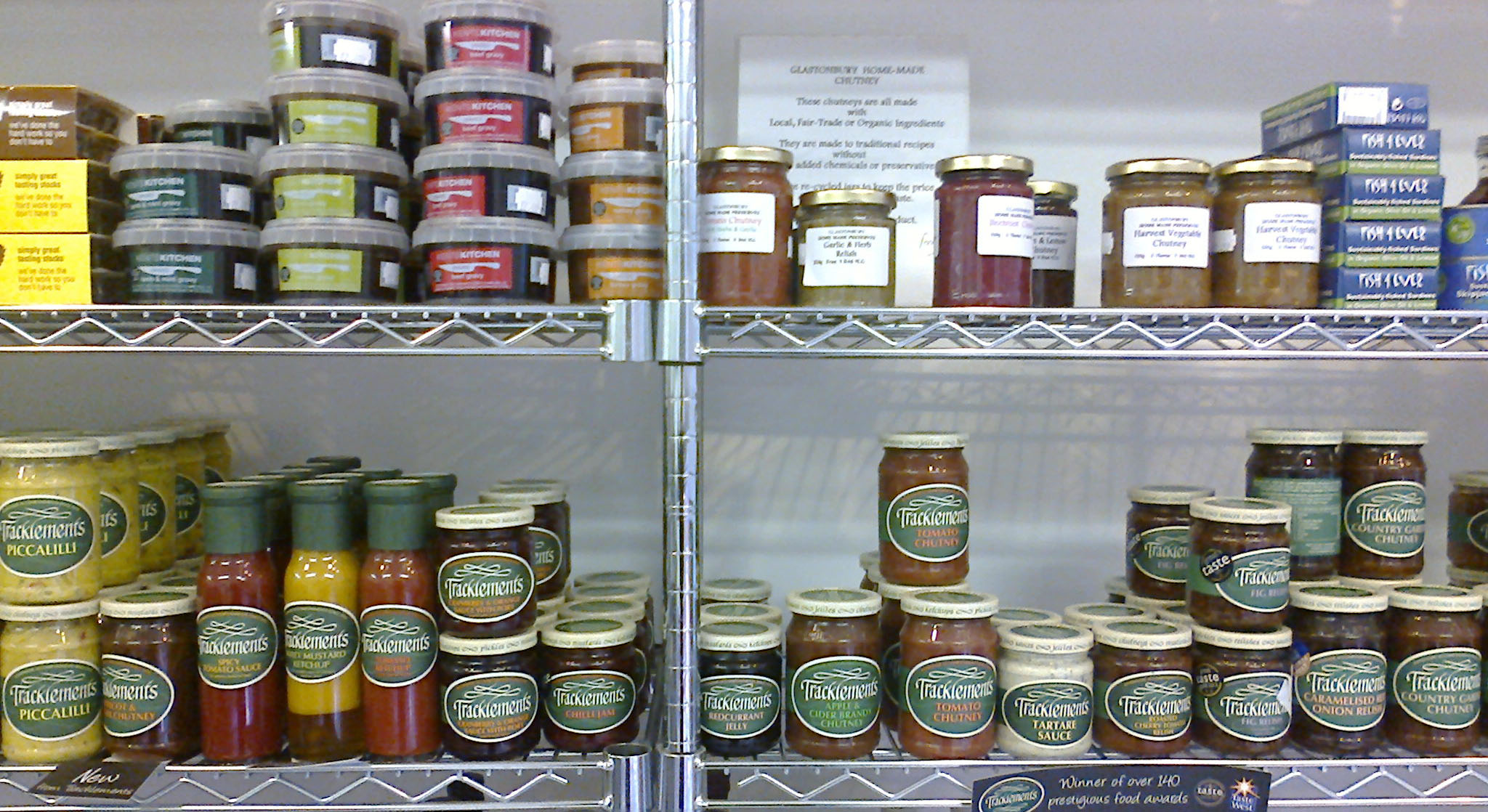
Write a shopping list. There’s plenty of food you could buy well in advance. Farm shops often sell chutneys, jams and pickles. Xmas cakes keep for weeks and are often on sale at markets. Consider making your own mince pies.

The best way to buy your Xmas dinner is to order fresh locally reared organic meat from the independent butcher. If you’ve never done this before, consider there may be a bit of a queue on collection day. Bring an umbrella, a newspaper, be prepared to chat to people, live a little slower.

Spend your Xmas surrounded by food, drink and gifts which that have meaning, not just labels. Start planning now!

local craft shop
Buy craft materials for friends at shops like Glastonbury’s Over the Moon
Stevens butchers on Glastonbury High Street
and while you’re in the High Street, check out the more exotic preserves at Steven’s Butchers


Diary, September 2014

Here at the house with the resilience garden, I’m in the last stages of getting the Resilience Handbook ready to publish – just the Interludes and Conclusion to do, then choosing some illustrations.

How do I persuade you how easy it is to jump on the Resilience bandwagon?

Off we go, waving hand made banners and singing, to the future that can exist! If we get a flat tyre, we’ll all pile out while it gets fixed. Some people will build shelters for the night, others cook up a meal for everyone, then away we go again in the morning! We know where we’re going and how to get there, even though it will take a while.

Sustainability with meaning. A defined goal with measurable steps.

And a Resilience Plan is fun, of course. It’s part of the core plan.

Between the hours of typing on to a screen and counting words, I’m making wine. It’s that time of year. The elderberries – which make a deep rich red – are gone now, but I may catch some blackberries. Sloes are easy to collect but the wine needs to mature for several years; then there are rosehips and apples to see me through till December.

If the weather stays nice, there’s an expedition to Carymoor eco centre on the cards. They aren’t using their blackberries, and they have willow beds. I need to make some willow fencing to go across the front of the garden. Having failed to explain to the neighbours why this would be a better replacement for their storm-downed solid panels than more of the same, perhaps I can show them instead.

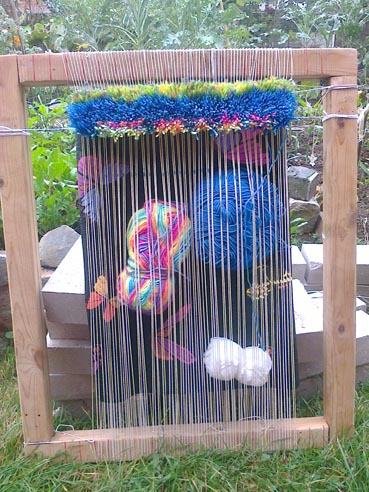
And occasionally I get to have an evening in on my own listening to DVDs and working on my Turkish style rug. It’s nearly six inches long now!

Knotted rug on frame loom with resilience garden behind

How to use a Spider to braid cord

for the people I met on my travels this summer

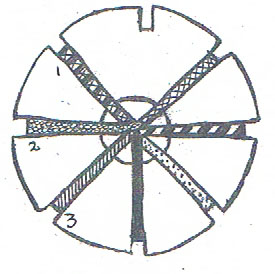
Find some thick card which does not crease easily, yet isn’t too thick to cut. A scrap of mounting board is ideal. Draw a circle about 9 cm across and cut it out. Divide the circumference into 8 sections of roughly equal size. Cut a thin notch, no more than 1 cm long, along each dividing line. Around the centre of your circle, cut out a hole about 1 cm across.

This is a spider.

Cut seven equal lengths of wool, ribbon or thread and knot them together at one end. Push the knotted end through the hole in the spider and lay the threads on top.

preparing the spider for braiding cord

Slot each thread into one of the notches around the edge. The notch should grip the thread quite tightly. There will be an empty notch. Hold the spider so that this is at the top.

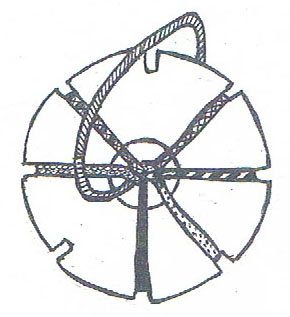
Count three threads to the left. Take the third thread and lift it over the first two, slotting it  into the empty notch.

taking the third thread from the left across the other two and into the empty notch

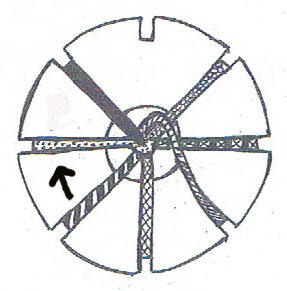
Turn the spider clockwise so that the new empty notch is now at the top. Repeat the process, lifting the third thread to the left over the other two. Your cord will start to form in the centre.

spider 3 v2

Keep the braiding firm but not overtight.

As you work, the loose ends waiting to be braided get tangled. Separate them every so often. This limits the length of your starter thread to about two arms’ length, but once you get the hang of braiding, you can splice new lengths in. Do these one at a time to avoid unsightly lumps, and to maintain the cord strength.

Once you have had some practise and know what you need this tool to do, you could cut a longer lasting version from thin plywood. Try making cord from wild grasses, braid heavy duty cables from thin rope using a much larger spider.

The use of braided wicks was a key development in candle technology. Can you replicate this process? Could you invent a simple machine to braid cord? Why might you need to?