Tag Archives: community

June Diary 2016

I expected June to be a quieter month than it usually is for me, as I’m not going to the Glastonbury Festival for the first time in many years. There’s no going against the rhythm of the seasons though, and events conspired to make this month every bit as hectic as before!

I’ve been working hard on my next book, about food and resilience…this involves a lot of experimental cooking and field studies. We finally got an allotment garden for our project; it’s quite overgrown. Although late in the season, we’ve managed to plant out the last of our seedlings, and there are quite a few food plants there already which only need the undergrowth cleared away.
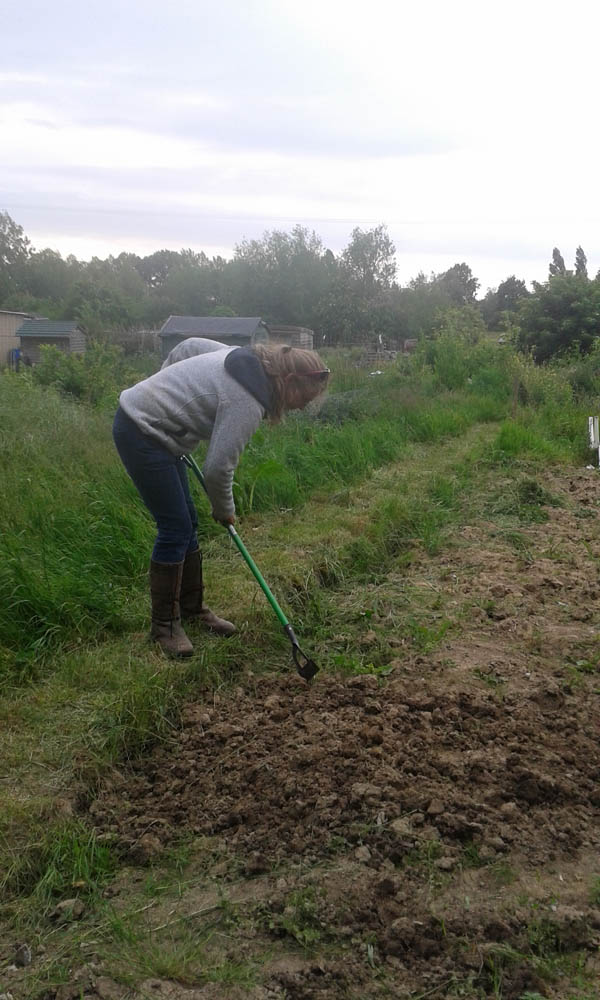
Linda hoeing our new growing space

It was the Green Scythe Fair on 12th June, which is an annual fixture for me. Strolling among the colourful stalls is like visting a future where everything has worked out fine. People gather around to admire the latest electric car on display, discuss the merits of the various tools offered for sale, consider hand made clothes or choose a pair of angora rabbits to breed for wool. The faint tap of peening scythes underscores the murmer of conversation. A woman plays her fiddle while children dance; other youngsters make nests from the cut grass.

A tremendous selection of local delicacies are to be sampled here, from crystallised flowers to venison steaks.
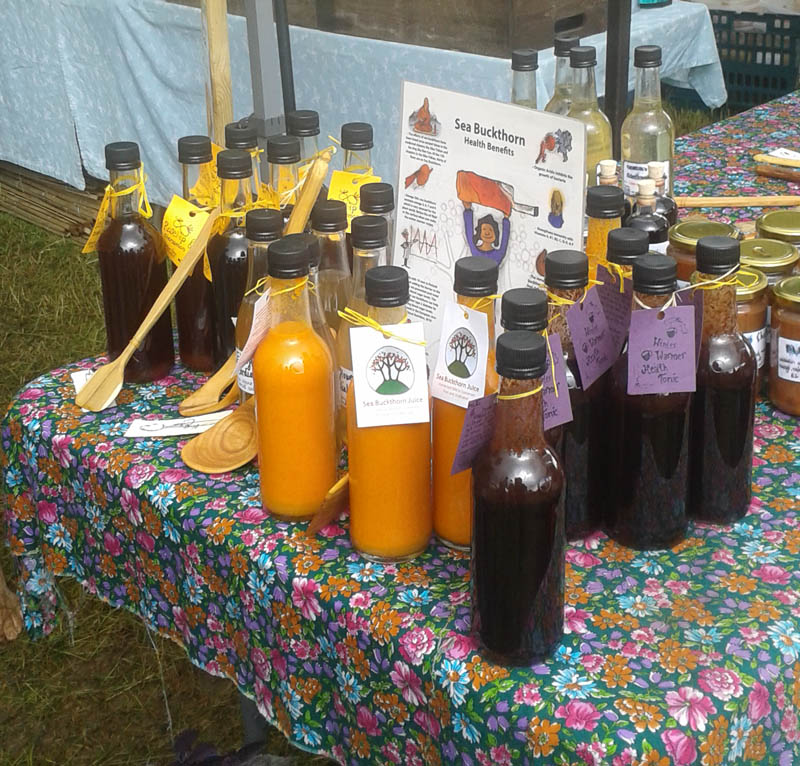
sea buckthorn juice stall
A stall selling juice made from sea buckthorn

You can get anything you can think of to do with honey, including a hive of bees. All the brand names, the shiny labels, are absent though. The cafe heats its water by wood-fired rocket stoves; the electrical power is from storage batteries recharged by renewables, including the lights and entertainment at night.

In the Craft area, one can see blacksmiths, stone masons and thatchers at work. There’s a stall selling hemp twine, another with leather pouches. A man haggles for an enamel basin, a woman picks a new copper kettle. The plough horses watch curiously as you pass by; yesterday they were demonstrating techniques for a land workers’ training session.

The centre piece of the event is the scything. A grand marquee is set up like a scything supermarket, with blades, whetstones, files, all the odds and ends of the craft. You are ‘fitted’ for the right size of handle, consulted about the appropriate blade and shown how to attach it. The complete novice is given a introductory pamphlet, but it’s wise to enrol on one of the day courses. Like any skill, it’s best learned alongside a master.

On the day of the Fair, however, all these craftspeople were out on the long grass in the centre, where the competitions were taking place. There were trophies to be won, reputations to be made! A sudden downpour had flattened much of the grass – how would this affect the form? The skilled scythers – men and women in separate heats – would cut their allotted square down to the length of a well trimmed lawn in only a few minutes. Assistants raked up the fallen grass while the judges inspected the quality of the job and considered points.

After the business of the day was done and the cups awarded, the music and carousing began in earnest. The stalls closed up and stole away; the families left. Only the crafters and campers were left to wind the evening up in traditional style and wobble gently home across the dark, empty fields.
Last Bank Standing

I am going to a demonstration in Glastonbury tomorrow, in support of banks. This is deeply ironic, given that our historic finance system remains a major barrier to developing local resilience. However…

…..High Street banks in the UK are mounting a pull out of branches in small towns, citing the expense of running them. NatWest departed Glastonbury High Street some years ago, followed by HSBC. Then both Barclays and Lloyds announced their departure, leaving the town with no banks at all.

As they were taking their cashpoints with them, the Radstock Co-op was swift to install another. Its central location among the crystal shops assuaged fears than tourist income may fall through lack of access to cash. Facilities for the many independent traders, who supply the charm in this undeniably attractive street, are a more serious problem.

Solutions explored always ran up against the cost of cash movement; the very issue the banks were failing to deal with. Petitions to the last two banks fell on deaf ears – especially bitter in the case of Lloyds, who were bailed out by the taxpayer in 2008.

The demonstration in town on Friday is to mark the closure of our Barclays branch. As this is Glastonbury, I’m not there to wave placards, but to hold the belly dancer’s coat while she performs. You can see a couple of amusing short films featuring our last protests on the issue here –

Jerusalem

Last Bank standing – Crazy Horse

What to do next, once the dust has settled?

Drive everything online? It would take too long to explain why that is so very far from resilient (read the Resilience Handbook!).

A local currency could take some of the pressure off the cash movement problem. Many sophisticated, user friendly and secure models are running now. Money that can only be spent in a certain area is far less attractive to thieves. Mobile phone transactions can be enabled, as with the Bristol Pound. The concept needs a big player to engage – Mendip District Council accepting local currency as an agreed fraction of Council Tax payments, for example. MDC would then pay local contractors for various tasks, who spend their local pounds in Burns the Bread.

So the money circulates, which is all it ought to be doing. Let it out of your sight though, and it gets up to all sorts of mischief. Just wait till BitCoin brings you the world of Quantum Accounting. You really need to pay your milk bill with something simpler.

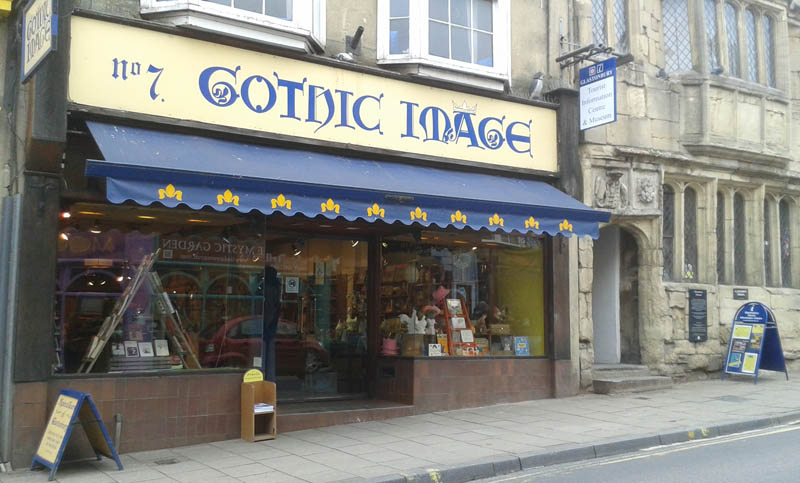
gothic image bookshop on Glastonbury High Street

And if you are in Glastonbury…you can buy the Resilience Handbook at the locally owned Gothic Image bookshop on the High Street! Save on postage!

‘What do you see as the other main threats to our current way of life?’

I had to prepare for a radio interview about the Resilience Handbook. The presenter gave me an outline of the questions he’d like to ask.

‘How worried are you about the way Britain is largely dependent on other countries for our food and fuel?

Very worried. It was one of the main driving factors in going to all the trouble of writing a book to explain what to do about it.

‘What do you see as the other main threats to our current way of life?’

Well, where does one start? Pandemics, economic instability, pollution…. all very threatening, but not quite what I was searching for. We already have the technology, the intelligence to climb out of this hole and start creating a better way of life, resilient against these and other threats. We’re just not doing it. Then I realised.

Our main threat is apathy.

Environmentalists argue with politicians, scientists with religious leaders, and year after year nothing is done. The endless economic growth promised seems to have turned cancerous. Resource wars are flaring up.

However serious the situation is, however impossible a solution seems, we arrived here slowly, one piece of shopping at a time. We need to take back our power and make new choices. While we still have access to fossil fuel energy, we can use it to rebuild a resilient culture. There’s no time to lose.

Even within a busy lifestyle, there’s room for these choices. You slump exhausted before the TV after a long day’s work. You make tea. Where did the milk come from? Can you have it delivered? Buy it from a corner shop? Explore the options. Just with the milk.

If you could buy milk direct from a local farm, in glass bottles, even that one tiny choice adds to the resilience of your area. More money stays in the local economy. Less plastic waste is created. If everyone in Somerset recycled just one more plastic bottle a week (that is, in many cases, recycle from the bathroom too), in one year it would save energy equivalent to one quarter of the output of the proposed Hinkley C nuclear reactor. How much more is saved by not buying the plastic in the first place!

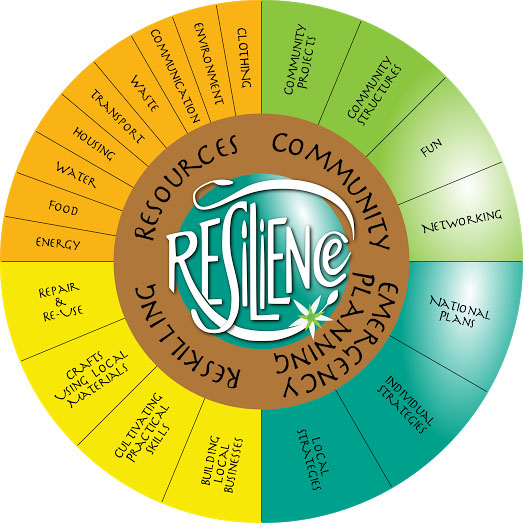
the resilience wheel

Read the Resilience Handbook and find out how everyone can do their bit for community resilience, from organising an off grid power supply to helping out in a litter pick. Learn to change your own lifestyle for one less energy hungry and more relaxed. Pay more attention to your food – you are what you eat. Go on adventures. Become resilient.

One person can make all the difference.

Calderdale floods – how to help

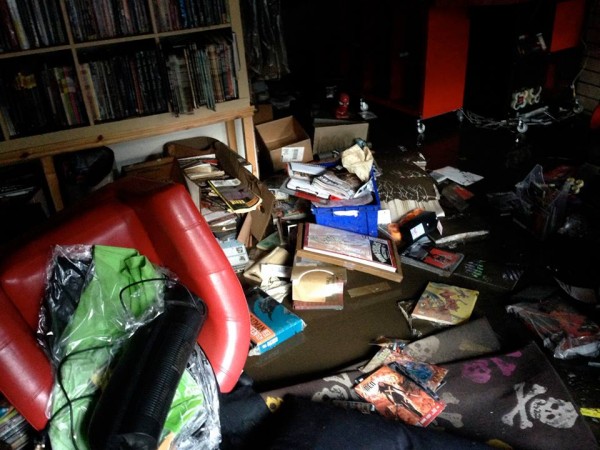
Campaign to help the independent bookshop flooded out in Hebdon Bridge….

hebden bbcpic 1

The comic shop took a hit too….

comic shop hebden

Here’s the donations site for the Community Foundation for Calderdale; monies raised to help with the clean up in general.  More news on the Calder Valley Flood Support facebook page.

Hebden Bridge features in the Resilience Handbook as a top example of a town with independent local businesses, and nearby Todmorden (also flooded) is the home of the inspirational Incredible Edible movement…they deserve your support!

Resilience Soup

Watching ‘The Island with Bear Grylls’, it appears that apathy caused by culture shock can lead seamlessly to exhaustion from lack of food calories. Part of a Resilience Plan is to keep a small store of tinned and dried supplies. I recommend keeping enough for three weeks, if you have the space.

Inspired to inspect my own collection, I found it was a bit haphazard and resolved to organise it. Counting calories and working out recipes…. I’ll have to write another book.

The stores have to be rotated as sell by dates are reached. Check through them every three months, take out anything that needs used before the next check, rearrange and restock. Never store food you don’t like. Storage conditions are often far from ideal; lofts suffer from stifling summer heat and freezing winters. You couldn’t store butter, for example.

If you ever need to rely on your stores, it’s useful to do some menu planning. Here’s one recipe..

Resilient Lentil Soup

A large pan. This recipe is easier to make in larger amounts. A tablespoon of cooking oil, some tamari (soy sauce). If you have any fresh meat or onion type vegetables to add, chop them up and lightly fry them.

If you are lucky, you may have some stock; otherwise add hot water and a couple of stock cubes. Add about four ounces [112g] of dried red lentils. Don’t pre-soak them.

How much liquid? Depends how many people you want to feed; this recipe is enough to fill four bowls. Remember the lentils will soak up some of it. If you have any root vegetables, put them in now. Grated carrot is nice.

Stir. Bring it to a low boil, then turn the heat right down and let it simmer. Mind it doesn’t stick; pans with thick bottoms are best for this work. Stir in four teaspoons of instant gravy mix and a quarter 130g tube of tomato puree. Keep an eye on the sticking as the soup thickens. You can add more water at any point.

Add any green leafy veg, shredded, just before the end. The soup is done when the lentils are soft, but can be kept simmering to wait for people for as long as you care to keep stirring it.

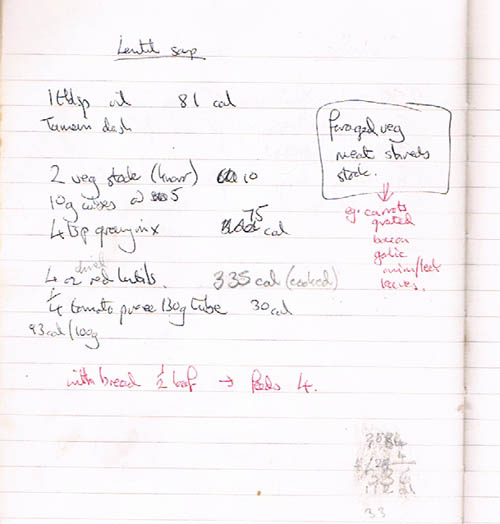
This soup really needs to be kept in a cold place to last over two meals, so it’s best made fresh and left overs eaten early the next day. Without the added fresh food, this recipe provides an unimpressive 550 calories* between four. If you’re completely unable to access any other ingredients, increase the lentils.

lentil soup calories
*all calculations are strictly back-of-the -envelope

However, what of your neighbours who don’t have stores? Remember, freezers depend on electricity. Could they help you forage to add to the meal? Bacon goes very well with this recipe; it may be available after less thoroughly preserved meats have spoiled.

A basic soup provides an expandable framework for a variety of fresh food.

Resilience.

There’s quite a lot to it.

May Day in Glastonbury

May Day – known by ‘rustics and dwellers on the heath’ as Beltane – has been a big celebration in Glastonbury for many years. People begin to gather around the Market Cross in late morning. Some are garlanded, or painted green and festooned with foliage. Singers and drummers arrive, the druids and bards in their regalia.

At exactly the right time, the rune carved Maypole is lifted onto the shoulders of the Men of Glastonbury, who felled and trimmed the tree it came from. They carry it up the High Street to the place where the Red and White Springs meet, on Chalice Lane. A merry throng follows them; children, elderly wizards leaning on their staffs, local politicians, gardeners, mechanics….

Everyone pauses at the Springs, to drink and mingle, to hear the next episode of the Summer story being told. Outside there is dancing in the sun, but in the dark pillared cavern of the Wellhouse there is an eerie, otherwordly atmosphere. The reflections of dozens of candles ripple in the flowing water, illuminating strange icons, masked and horned, in shadowy alcoves.

The place echoes with a wordless singing. No-one is performing. It is the separate voices of the people wandering gently around the maze of pools, each lifting up their voice in a single note as they pass through.

The occasional traffic becomes impatient, and the motley crowd moves on to Bushy Coombe. The hole for the Maypole is already waiting – dug by the Women of Glastonbury, of course. A huge circle froms around the May Queen with her consort and entourage. The chief druid steps forward and calls upon the elements, personified by costumed celebrants. The Green Men ready themselves to lift the pole as the Queen attaches the ribboned crown.

“I like your pole,” she says to the King.

“It’s a very long one,” he replies slyly.

Up goes the Maypole, wedged securely in place. A brief instruction on the dance follows but, since everyone is welcome to have a go, it is soon a round of happy chaos. One of the bards sees to the loose ends, while the others prepare to close the ceremony. They dismiss the elements with thanks; the Royal Pair retire to their willow bower to dispense honey cakes and mead.

Gradually the participants drift away, heading home in their bright clothes like windblown confetti, to the wonder of passing tourists.

Measuring Radiation – Roentgens, Rads and Rems

The roentgen is defined as 2.58 x 10⁻⁴ coulombs of charge produced by X-rays or gamma rays per kilogram of air.

A roentgen is a lot of radiation. A dose of 500 roentgens within five hours will kill you. So a place with a reading of 100 roentgens per hour or more is very dangerous. Shortly after the Chernobyl nuclear disaster, readings of up to 30,000 R/hr were recorded in some areas.

Devices are usually calibrated in tiny fractions of one roentgen. There are a thousand milliroentgens to one roentgen. The reading will often be given in mR/hr. Flying at high altitudes exposes passengers to around 25 mR/hr, due to cosmic radiation.

Rad stands for Radiation Absorbed Dose. The units used here relate to the amount of radiation absorbed by the irradiated material. This may be you. One rad indicates exposure equivalent to an energy of 100 ergs per gram. It is about the same as 1.07 Roentgen, or 1,070 mR.

Rads are useful when assessing whether acute radiation sickness is a risk. A dose of 10 rads (10,000 mrads) in less than an hour is dangerous. Treatment for ARS will be needed.

The absorbed dose, measured in rads, is adjusted to give the Roentgen Equivalent in Man. The type of radioactive material is taken into account, among other factors. This unit is used to assess the chances of getting cancer from exposure. It is used to calculate safe levels in industry and medicine.

A rem is a large amount, so readings are generally given in millirem (mrem). The general public should not be exposed to over 100 mrem per year. This is just over the natural radiation levels inside a building made of granite.

Roentgens, rads and rems are very roughly equivalent. As the adoption of international standards became important, they were replaced by other units. Some countries, particularly the USA, continue to use the old ones.

part three ‘Sieverts and Grays’ to follow

A community transport hub

Imagine not a simple bus shelter, but a small building in every village, at every key location in towns and cities. It’s furnished with cushioned chairs, magazines and a water dispenser. The place is kept clean and maintained by a rota of local people. The solar panels on the roof provide power for lighting – including the ‘Stop’ light outside so that the bus driver knows there are passengers to pick up.

Buses come every hour at most and there is thoughtful scheduling of connections. No matter how long or awkward your journey, you never have to wait more than an hour to catch your next link. Fares are cheap. A day pass costs scarcely more than a single journey. A conductor helps you on with your luggage, and can advise you about other services.

There are lockers in the building, operated by tokens or small coins, where you can leave your shopping and go for lunch. Or lock your bicycle to the racks outside and store your wet weather gear to catch the bus for the trip to work in town.

Shoppers are transported directly into the town centres. The independent shops do well, local produce sells and is encouraged, money stays within the community. Many new jobs are created.

There is a community notice board at the hub, with news of events, official meetings, items for sale or wanted. At busy times, a local business brings a small mobile stand for newspapers and refreshments. There is a roll-out awning on one side of the building to protect a weekly produce stand, or a sale in aid of some project.

The buses are partly run on electricity, and there is a charging point close to the hub, perhaps powered by the community windmill. The surplus is available to local disabled people to charge their small electric cars.

A network of bicycle tracks links these hubs. They often use different, traffic free routes with the occasional shelter along them in case of heavy rain. Footpaths sometimes follow these routes, sometimes diverge into wilder, more scenic areas.

Where does the land come from for these hub buildings?

Car parks.

© Elizabeth J Walker 2014

Driving in the Water Margins

Here on the levels in Somerset between the sea and the high ground we’re used to seeing the water. Driving between towns, the fields are shimmering mirrors, traced with sunken hedges, populated by opportunistic swans. The main roads are edged by dark puddles, threatening to merge over the white line with every fresh downpour.

Villages hugging the tiny ridges of high ground out in the marshlands are often cut off. Farm tractors become informal delivery vans and buses. Rows of willow trees, planted so that people can see where the road was, come into their own. The river lurks just over a low bank.

The network of narrow lanes across country are under water in many places, especially at the crossroads and gateways where you could have turned around. If you come upon one flooded section, chances are there are more ahead. It’s unwise to use these lanes as a short cut.

Towns are linked by single main roads. An incident on one of these could involve you in a twenty mile diversion just to get back from the shops. If that route then becomes blocked – easy enough with the high winds and dangerous conditions – hundreds of people could become stranded for hours.

Keep at least half a tank of fuel, even for local journeys. Carry waterproofs, wellies and a drink of water in your car. Make sure your mobile phone is charged.

Shop with a list and bring in extra long life food. Try to avoid going out at all in heavy rain. Start using all those ready meals in the freezer; if your electricity goes, they will be a write off anyway.

Night time is the most dangerous. Plan to stay in, invite neighbours round, play cards or games, learn to knit. Spending all your evenings slumped in front of the TV will soon give you cabin fever!

Driving through flood water is unwise, especially if you are on your own. You can’t see how deep it is, if the road has been washed away underneath, if there are any obstructions ahead. Your electrics may get damaged.

Don’t change gears but drive slowly and steadily. If your engine cuts out, it may have got water in it. Trying to restart it might destroy it.

Even six inches of fast moving water can sweep you off your feet, and not much more can move your car. If you become trapped in a flood, call for help at once. Don’t panic and think very carefully about your escape route.

Resilience is about adaptation. Change your behaviour in response to the environment. Go out as little as possible and make every journey count. Even if you’re not directly affected by flooding, you could still be caught up in a diversion as police try to clear another area. Your presence on the road is one more factor for the emergency services to take into account, so don’t waste it.


Community Resilience and Emergency Welfare Newsletter

C.R.E.W are borrowing space here to post their steward newsletter until they can sort out a new website; however this coincides with some exciting changes in their organisation…

“Hi to all our loyal and fabulous volunteers!

Wishing you all a merry festive season!

We have rather suddenly got a new email address crewcic@gmail.com since the locally based Ergonet hosting company went bust – please direct all stewarding enquiries here for the moment and we will let you know if this changes. They wouldn’t let us send out this newsletter.

We’re seeking funding for a new website, which will come with a proper email address.

We’ve now become a Community Interest Company so that we can develop more of our resilience courses and practical skills camps. We’ll still be running stewards at One Love next summer, but not the Green Gathering. However, we are recruiting people for traffic management at the Langport Scythe Fair in June, and are looking for small event work especially in Somerset.

For next year, we’re planning low cost resilience training courses in France, the opportunity to meet up at an established camp and various hands-on craft events, among other things. We’ll send out a more detailed newsletter in the New Year.

As we are now a proper company we are building up a stock of useful items and local craftworks for sale to raise money for providing training in all aspects of resilience. For example….

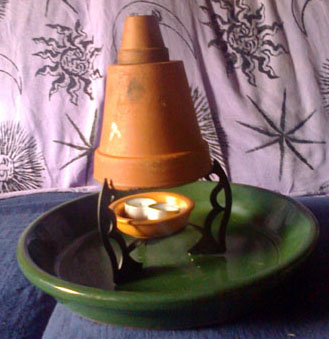
Candle stove (as seen on Facebook except this one has been researched and tested for the past year)

 new design 72ppi

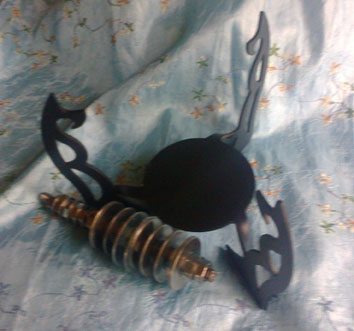
 The key features are the stainless steel core and the metal stand, which we can supply for £25 (Stand £20, core £7.50 sold separately) with full instructions.  Contact the temporary gmail address above for details

 new stand and core 72ppi

Resilience Handbook a 32 page A5 booklet with the basic outlines of the Resilience Wheel concept, as seen on our now vanished website, which is £3

Both items are post free to our volunteer community!

Our Facebook friend page CREW HQ regularly posts interesting and useful ideas around resilience and sustainability, please do join us there!

Cheers

Jane & Helene (Directors)

Linden (Secretary)

Linda (Consultant)

Simon (Marketing)”