Category Archives: Food

Diary October 2015

The Resilience Handbook has been out in print for a busy two months now. Distributing and promoting has taken up most of my time – learning to sell books from a standing start! I’m just about to go on tour, heading north through the scary urbanisation of the Midlands to Hebden Bridge for the Food Sovereignty gathering.

poster for Food Sovereignty

I’m planning to stay on and revisit the wonderful people at Incredible Edible Todmorden nearby – I hear their aquaculture project is thriving. Then, taking the North Wales Expressway which I hear so much about on the traffic news, off to explore Welsh bookshops ending up with a visit to the Centre for Alternative Technology at Machynlleth. I hope the weather holds!

No wonder we obsess about the weather in Britain. I’ve had to pack for wet cold, dry cold, unseasonable warmth and days of torrential rain. I could get all or none of these during a ten day walkabout! I’m afraid I drew the line at taking a spade to dig myself out of snowdrifts, as my neighbour advised, though that may turn out to be a false economy.

Packing wasn’t the only weather challenge this autumn. There were two weeks of cold wet weather at the end of August. My optimistic crops of sweetcorn and chickpeas went mouldy where they stood. The slugs multiplied alarmingly, not even bothering to crawl into hiding during the long wet days.

Once things dried out somewhat, I had to clear up the wreckage and deal with Mollusc World Domination. I replaced the stone slab garden bed paths with oven shelves and bits of fireguard; metal grids providing no shelter for them, nor for Ant City. I’m normally quite tolerant of ants, but this year they managed to destroy an entire courgette crop and most of the broad beans with their bug farms. Chemical warfare, however, is just not on the agenda.

The elderberry harvest in early September was upset by this weather; it took far more trips to collect enough for the crucial anti-flu syrup and we may not have a full winter’s supply. Elder trees can exert a great deal of influence over their flowers. They will hold them back as buds during rainy days, then open them like sudden umbrellas as soon as the sun comes out. Much the same applies to their berry clusters.

My friend’s bees didn’t produce enough honey to see themselves over the winter, so they will have to be fed by humans. I don’t know if this was the weather. Perhaps they are on strike against pesticides.

Right. Departure delayed to let the high winds abate, but not for too long or I’ll get entangled in Rush Hour. I just have to check out Knit for the Planet – who are the Woolly Angels? – and pack some wool….

A Call to Action!

Today most people in Britain live in cities, in an environment constructed by other people, surrounded by things made by people.

It’s easy to become detached from the underlying reality, to feel that complaining about something on social media is radical problem solving behaviour. That if things aren’t going your way, somewhere there is another human being who is responsible for this, who needs to be goaded into doing something about it.

There is. It’s you.

The modern world is so vast and complex that it defies understanding and control. The authority figures you set up and love to hate have no more idea how to cope than you do. Often their core skill is in clawing their way to the pole position in a group.

You put them there.

By abdicating your continuing responsibility to participate in this understanding and control, you keep them there. Struggling to satisfy the needs of millions, while fending off predatory interests from outside. Nobody can succeed in this role.

Their only hope is to simplify everything. Let food be produced by huge farming industries, processed by a single firm, distributed through a vast network owned by one person. Then all the people they need to talk to can meet in one room. There is the comforting illusion of being in control of the situation.

If you’re happy to be painted grey, to fit in a box, to be collateral damage in someone else’s movie, then that’s fine. That’s where it’s all going; just keep calm and carry on.

Or start paying attention.

You can deplore the effect of supermarkets on the local economy – did you vigourously oppose their planning applications? – but are you still using them? Convenience is a word with a lot to answer for. Go exploring for alternatives. Make food an adventure!

When a chain store closes, is your community poised to replace it with a locally owned co-operative? Would people spend their money there to keep it going, to keep wealth in the area? If not, why the hell not?

It’s difficult and complicated to work this out. Food is only one of the factors you need to consider when reclaiming your responsibility. I wrote the Resilience Handbook to show you how to make a really good beginning to this process. It’s packed with information which you can research in more depth – almost every paragraph unfolds into a whole article, a speech, a coherent argument. The key feature though is the call to action, gaining the practical knowledge you need to develop by doing things.

You don’t get fit by talking about exercise.


A Resilience Adventure

One of the adventure challenges in the Resilience Handbook is ‘Visit a Repair Cafe and have a cup of tea.’ My budget didn’t stretch to a trip to Amsterdam or Germany, so I looked online and found the nearest one, in Bristol. This is held on the first Saturday morning of every month in All Saints’ Church, Fishponds.

I set off on the bus – I try not to take the car into cities – and navigated to the venue with the aid of my trusty A-Z map book. It took longer than I thought, and most of the actual repairing was finished before I arrived. There was tea though, and cake, courtesy of the church volunteers. I had a good chat with the organiser, Kate, and presented her project with a copy of the Handbook. It’s a pity there isn’t a branch of Repair Cafe nearer home!

Repair cafe banner

The networking potential of these meeting places was quickly demonstrated. Hearing me talk about resilience inspired a young lady to take me to the Feed Bristol Harvest Fair, a short walk away.

This event was so fabulous it was almost surreal! I felt as if I’d been transported into a Transition vision of a post-oil resilient community!

The Welcome gazebo was surrounded by tables of the most intriguing plants for sale – I couldn’t resist the Vietnamese Fish Mint – beyond which stretched polytunnels and plots under cultivation. Further in, excited children raced around tiny woodland paths, played in the sandpit, made paintings using mud and colourful flowers. Adults strolled more sedately, exploring the roundhouse, the herbal gardens, the tree plantings.

One could sip Fair Trade tea in the open marquee while listening to a string quartet playing in the autumn sunshine. It was a glorious day!

feed bristol harvest fair

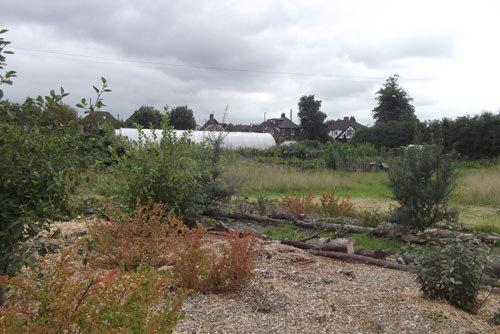
The growing area – due to restrictions on images of children, I can’t show the actual fete, but there’s plenty of pictures on the websites

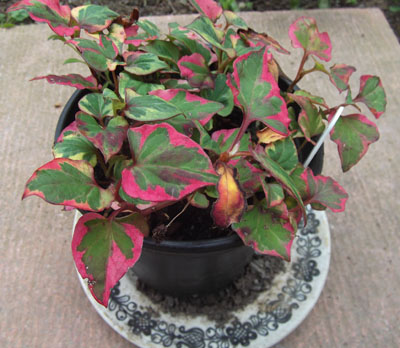
vietnamese fish mint

Vietnamese fish mint is not a mint, but does taste of fish!  And it’s very pretty.

At the Harvest Fair, I spoke with soap makers, food cooperative organisers, gardeners and teachers. The project is run by Avon Wildlife Trust; the remit is to create an edible yet wildlife friendly landscape, and it works very well. As I listened to the people who worked there, I began to realise that this project utilised the same core concepts as a Resilience Garden!

  • for use by the surrounding community
  • an emphasis on education, demonstration and experimentation
  • the abillity to produce large amounts of seed and spare plants to fast track other growing spaces in a crisis
  • creation of an edible landscape which supports a positive relationship with local wildlife, especially friendly insects and birds

Although defining a Resilience Garden is a struggle, I know one when I see it!

Areas like this should be a key feature in every housing development.

Borage and Brie Tart

The beautiful blue or white flowers of borage are a lovely feature of the Resilience Garden. They currently add colour to the patch of seeding cress, and are very attractive to bees.

cress and borage resilience garden

Borage is relentlessly self-seeding. Fortunately the leaves are edible and a regular cull of small plants yields plenty for this recipe. The other important ingredient is a chunk of cheap soft cheese – Brie, Camembert, goat’s cheese – which you’ve picked up on offer.

I found some Somerset Brie at the Farmers’ Market, and it was time for some selective weeding.

The Recipe

Collect a colander full of young borage leaves. Wash, lightly shred, and steam for about ten minutes until they are quite soft and merged into a pulp. Make a shortcrust pastry base and bake it blind. I’d use a small dish to try this out, about 8” across, which takes a mix of three ounces of fat to six ounces of plain flour.

Spread a layer of steamed borage across the cooked pastry base, between half and one centimetre thick. Now do your best to slice the soft cheese and cover the layer of borage with it. Settle for dotting chunks on the tart if you have a particularly resistant cheese; it will melt.

Bake it on the middle shelf of a medium oven until the cheese has melted to your satisfaction while the pastry edges remain unburnt. It takes twenty minutes or so, if you work while everything is still hot.

Adding Things

This is the basic structure of the borage cheese tart, to which you can add by foraging. For this one, I foraged a red onion from the vegetable basket and a few rashers of smoky bacon neglected by the lodger. These were finely chopped and fried up together, then stirred into the steamed borage. While in the garden, I’d found a couple of early courgettes. Thinly sliced, these made another layer on top of the borage.

We had the tart cold, with new potatoes from a tyre stack and salad leaves from the greenhouse next door; the meal fed three adults. Even the weeds in the Resilience Garden are useful!

Resilience Soup

Watching ‘The Island with Bear Grylls’, it appears that apathy caused by culture shock can lead seamlessly to exhaustion from lack of food calories. Part of a Resilience Plan is to keep a small store of tinned and dried supplies. I recommend keeping enough for three weeks, if you have the space.

Inspired to inspect my own collection, I found it was a bit haphazard and resolved to organise it. Counting calories and working out recipes…. I’ll have to write another book.

The stores have to be rotated as sell by dates are reached. Check through them every three months, take out anything that needs used before the next check, rearrange and restock. Never store food you don’t like. Storage conditions are often far from ideal; lofts suffer from stifling summer heat and freezing winters. You couldn’t store butter, for example.

If you ever need to rely on your stores, it’s useful to do some menu planning. Here’s one recipe..

Resilient Lentil Soup

A large pan. This recipe is easier to make in larger amounts. A tablespoon of cooking oil, some tamari (soy sauce). If you have any fresh meat or onion type vegetables to add, chop them up and lightly fry them.

If you are lucky, you may have some stock; otherwise add hot water and a couple of stock cubes. Add about four ounces [112g] of dried red lentils. Don’t pre-soak them.

How much liquid? Depends how many people you want to feed; this recipe is enough to fill four bowls. Remember the lentils will soak up some of it. If you have any root vegetables, put them in now. Grated carrot is nice.

Stir. Bring it to a low boil, then turn the heat right down and let it simmer. Mind it doesn’t stick; pans with thick bottoms are best for this work. Stir in four teaspoons of instant gravy mix and a quarter 130g tube of tomato puree. Keep an eye on the sticking as the soup thickens. You can add more water at any point.

Add any green leafy veg, shredded, just before the end. The soup is done when the lentils are soft, but can be kept simmering to wait for people for as long as you care to keep stirring it.

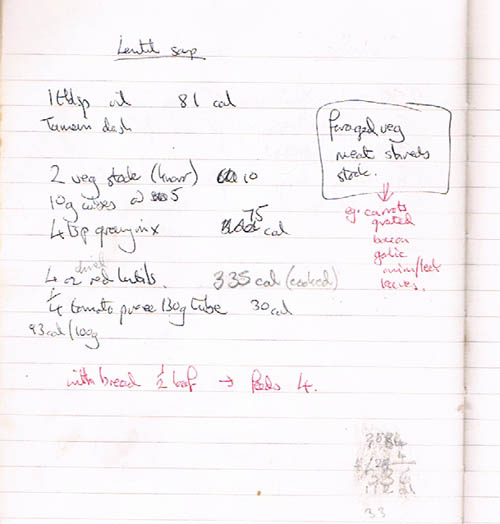
This soup really needs to be kept in a cold place to last over two meals, so it’s best made fresh and left overs eaten early the next day. Without the added fresh food, this recipe provides an unimpressive 550 calories* between four. If you’re completely unable to access any other ingredients, increase the lentils.

lentil soup calories
*all calculations are strictly back-of-the -envelope

However, what of your neighbours who don’t have stores? Remember, freezers depend on electricity. Could they help you forage to add to the meal? Bacon goes very well with this recipe; it may be available after less thoroughly preserved meats have spoiled.

A basic soup provides an expandable framework for a variety of fresh food.

Resilience.

There’s quite a lot to it.

Diary, December 2014

The Resilience Garden glitters with frost, which should finally put a stop to the ravages of slug and snail. The September rocket sowing bolted due to the warm weather, a November replacement sprang up with enthusiasm but then settled down to wait out the winter as seedlings, and the molluscs ate most of the spinach.

Feeding the leeks has worked, though.

Waiting for a book to get published is an arduous task. I’m using the time to develop my own Resilience Plan some more.

This has involved me in adventures with an anti mould paint based on calcium hydroxide. The resilience pioneer can study the manufacture of this and other basic chemicals in The Knowledge. Use your Xmas tokens. It’s a good ‘man book’.

I’ll be appearing on The Knowledge website as a guest writer in the New Year, covering some of the amazing projects I’ve found on my travels!

Meanwhile, I’ve been designing learning modules to go with the Resilience Handbook, exploring more strange landscapes, repainting the house….

…and working with CREW HQ to organise a series of free craft workshops next year!

These will be held fortnightly on Sunday afternoons at the Red Brick Building between Glastonbury and Street, in Somerset. The first one is to be on February 15th. We’ve been part-funded by Aster Communities, and about thirty local craftspeople signed up at the Frost Fair last month.

Traditional crafts are going to be demonstrated and visitors can learn some simple techniques on the day. You can learn to fix things, get advice on your own projects, and generally network with skilled artisans. If you’d like to talk about a Repair Cafe, starting or joining a community crafts group, building a career as a craftsperson or anything like that, do come along.

I’ll be there teaching resilience. How resilient are you now? Why are practical skills important? Try out the questionnaire and design your plan.

Best Wishes for the New Year!

Growing Rocket

Rocket leaves are good in salads. Once you are used to the slightly peppery taste, you may find ordinary lettuce too bland.

It’s this taste which makes it resistant to slug attack. Rocket is easy to grow, and can be sown any time of year for a crop of fresh leaves. These contain the essential vitamin C not found in preserved foods.

If sown in autumn, the plant will overwinter as a small form, about 20cm (8 inches) high, with many leaves. These are densely packed, providing good ground cover so that little weeding is required.

You can use this as cut and come again for winter salads. Even if covered by snow, the plant can quickly regroup to produce more leaves. If it is protected from frost, you can browse on it all winter.

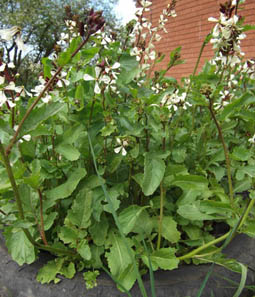
When spring arrives, though, it will grow quickly, with long tough stems. Flowers, as shown in the picture, appear. The energy of the plant will be directed to seeding, so the leaves will gradually become tatty from the attacks of small pests. All parts of the plant remain edible, though, and the flowers make a pretty decoration for summer salads.

The leaves become more fiddly to collect, so once the wild garlic is out and if you can use the space for more seasonal vegetables, dig up most of the rocket at this point. Leave the best looking plants to carry on flowering. They’ll produce seed, which you can harvest when the seed pods are dry. You can use this seed to sow your next crop of rocket.

It is a prolific self seeder as well, so learn to distinguish these seedlings from inedible weeds. If you allowed any rocket to go to seed this spring, the seedlings will be coming up right now. Sowing on a different patch with saved seed can be left until September.

flowering rocket plants

This article was written to accompany packets of rocket seeds donated to the Fair Frome Food Bank in Somerset.  For more information about this project, please visit here

Not too late to grow food!

The rain has finally eased off in Somerset and the sun even comes out occasionally. The soil is saturated and the legions of molluscs are emerging from their winter caves. Yet the intrepid gardener must make the best of it and see what can be grown.

Adding some dry compost or soil improver before sowing will help to soak up the water in seed beds. Circling these with a ring of dry bran discourage slugs. Try and avoid resorting to chemical pellets, though the neighbourhood cats have probably put paid to any natural predators.

If you have windowsill or greenhouse space, start some plants off there. Don’t put them all out at once. Grow enough to have a reserve, and be careful to harden them off before planting out. Healthy plants are the best defence against pests.

It won’t be a good year for the more delicate vegetables. Potatoes can hold their own in most circumstances. Plant them around the edges. The hairy leaves of pumpkins and squash are also resistant to attack, though it is too early for these to go outside. Sow a catch crop of radish or cress in the large patch of empty space they will need later.

Remember to feed your soil. The liquid fertiliser you made last year from comfrey and nettle leaves will do just fine. Peas and beans make their own nitrogen, however, so don’t overdo it around them. Avoid treading on the soil to keep its structure intact. Keep to marked paths in large beds. Once the soil is properly aerated, the difference is obvious.

Brassicas will need constant attention this year. They’re worth some trouble for their winter leaves and the delicious sprouting heads in the following Spring. However, if they can survive the mollusc army, the caterpillars will be next. Planting nasturtiums in the same bed distracts these creatures, who will munch on them by preference.

Leeks do better in clay soil than onions. They develop slowly but steadily, requiring little maintenance apart from weeding. Root vegetables prefer sandier soil, which you can mix yourself to cultivate carrots in pots, or the larger parsnips in tyres.

Finally, don’t forget to sow some borage and marigold. The colourful flowers attract bees and make the vegetable patch look decorative. Happy gardening!

© Elizabeth J Walker 2014


Roast dinner and leftover stew

You’ll find that collecting vegetables from the garden adds to the preparation time for a large meal. They need to be dug up, washed and trimmed. You can economise on effort by cooking more than you need and adding the surplus to a stew the next day.

Buy a bird or joint for a roast dinner. You can afford organic free range, as you’re going to be able to get up to twelve adult meals from under £10 worth. While it is cooking, use the oven to roast trays of potatoes, onions, parsnips, carrots and squash – whatever you have available. Keep enough room for a tray of Yorkshire puddings to go in later.

Timing is crucial. Wash all the vegetables. The meat will take longest to cook, so put it in first. Read some recipes for more exact times. After the meat has cooked for awhile, the roast potatoes are next. Put them on the shelf above the meat until they start to brown when you can move them lower. If you get fed up waiting for this to happen, you might be able to finish them off under the grill. Don’t forget they are there.

Make a Yorkshire pudding mix using one egg, two tablespoons of plain flour and four fluid ounces of milk. It needs to stand for at least half an hour before cooking. Longer is better.

Prepare the vegetables for roasting. They can go in when the potatoes are getting soft nearly to the middle. You could move the meat down a shelf now. Do use hand protection when moving hot oven shelves, always take the trays off and set them on a heat proof surface first, and be careful of hot oil.

Cut up some cauliflower, shred brassica leaves, spinach or chard ready for steaming on the hob. Take your Yorkshire pudding trays, add a teaspoon of oil in the bottom of each and put the empty tray near the top of the oven for the oil to heat up.

Check the progress of the other things in the oven. The meat should be nearly ready to take out and the vegetables almost edible. If not, this is a good time to tidy up. When everything else is up to speed, take out the trays and carefully add a couple of tablespoons of the batter mix to each. The above amounts should make six, just share it around, they don’t need to be very full. Return them to the oven, near the top. Start steaming the vegetables.

The idea is to smother everyone’s plate with vegetables so that they do not notice there is only a small piece of meat each. The Yorkshires are for filler, and if you can make a thick gravy using the juices from the roasting dish, so much the better.

Hide the rest of the meat, or otherwise ensure no-one is going for seconds or midnight raids. There should be a mixture of vegetables left over. Keep these for the next day’s cooking, when you will be making leftover stew, possibly with dumplings. If you bought a bird, you can make a stock with the carcass and use this as a base for a broth on the third day.

An expanded version of this strategy, along with recipes for vegetables, has been included in ‘Recipes for Resilience’, to be published in 2018.

Mince and Barley Broth

This is incredibly cheap and can be put together in minutes, then left to cook while you do other things.

Use a large pan. Take a half pound (about 250 grams) of mince, preferably from your local butcher, and brown it in a little oil. A dash of soy sauce at this stage improves the colour. Add a couple of finely chopped onions, herbs and garlic.

Stir till the onion is soft, then lightly sprinkle with plain flour and stir some more. Slowly add a litre of hot water as you stir, then crumble a stock cube into the broth. Throw in a couple of handfuls of dried barley grains and simmer on a low heat for at least half an hour, stirring occasionally.

Serve with bread. This broth provides a nourishing meal for at least four people.  Increase the quantities to feed more.

At this time of year you will find that your stored potatoes begin to soften and sprout. Soon they will no longer be a reliable source of carbohydrates and the resilient household will need to turn to grains.

The leeks you planted last year will be ready to use now, and can be substituted for onion in this recipe. For extra vitamins, add shreds of new brassica leaves or throw in a handful of chopped wilted rocket just before serving. Use up the last of the potatoes, carrots and parsnip over the Spring to bulk the broth up into a stew.

Dedicated survivalists can, of course, strip the meat from a lightly roasted rabbit or squirrel and make a stock from the carcass instead of using mince and hot water.